



The first thing that needs to be said about Warhammer 40,000: Mechanicus II is that it is not Mechanicus. It does not play like Mechanicus, it is not structured like Mechanicus, and if you sit down expecting a straightforward continuation of Bulwark Studios’ 2018 cult favourite, you are going to spend your first few hours confused and possibly disappointed. The jump feels something like going from Frostpunk to Frostpunk 2 — much of the thematic DNA carries over, but the architecture underneath has been substantially rebuilt. Whether that rebuild lands depends heavily on what you wanted from a sequel.
Out With the Tech-Priests, In With the Leader
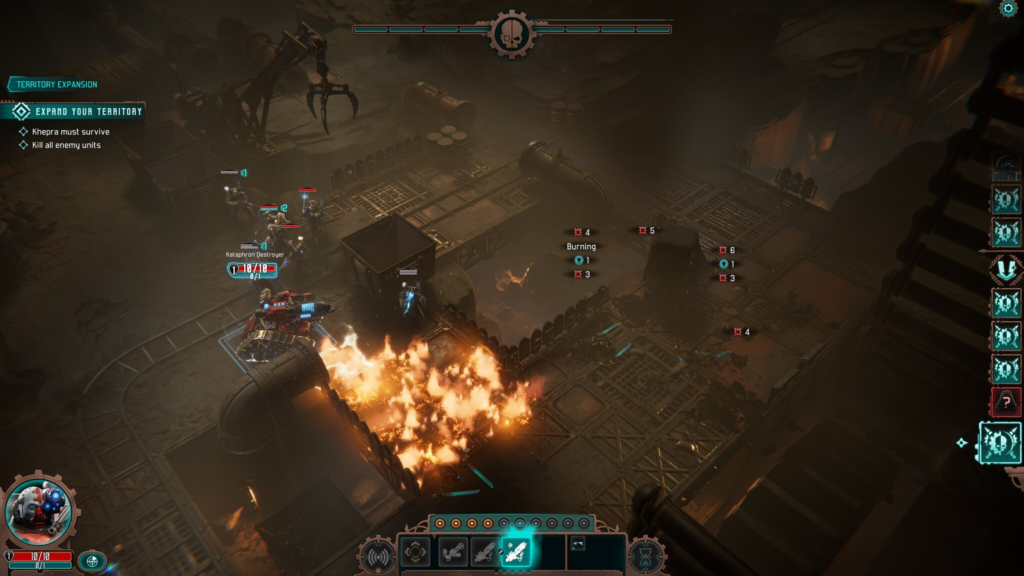
The single most significant change is structural. Where the original gave you a roster of several fully customisable Tech-Priests to mould as you saw fit, Mechanicus II hands you a single named Leader character — Magos Dominus Faustinius for the Adeptus Mechanicus, Vargard Nefershah for the Necrons — commanding a force of largely disposable troops.
This shift matters more than it might sound. Those troops can be upgraded at a meta level, but they are expendable in a way the original game’s units never were. There is no penalty for feeding your techno-chaff into the meat grinder to secure an objective. For my money, this is a thematically stronger fit for the Warhammer 40,000 universe, where the Mechanicus in particular treats individual lives as currency to be spent in service of the Omnissiah. Only the Leader needs to survive a mission, which makes the back half of many fights genuinely brutal — you are expected to lose units, and the late-mission objectives are balanced around that assumption.
The result is a harder game than its predecessor. The original Mechanicus generally boiled down to “eliminate the war criminal of the week” with a squad that survived intact from mission to mission. Mechanicus II asks you to accept attrition, and that demands a different mindset. I found the tension of deciding which units to sacrifice and which to protect more engaging than the original’s comparatively safe encounters, but it is a sharper, less forgiving experience.
The Customisation Confusion
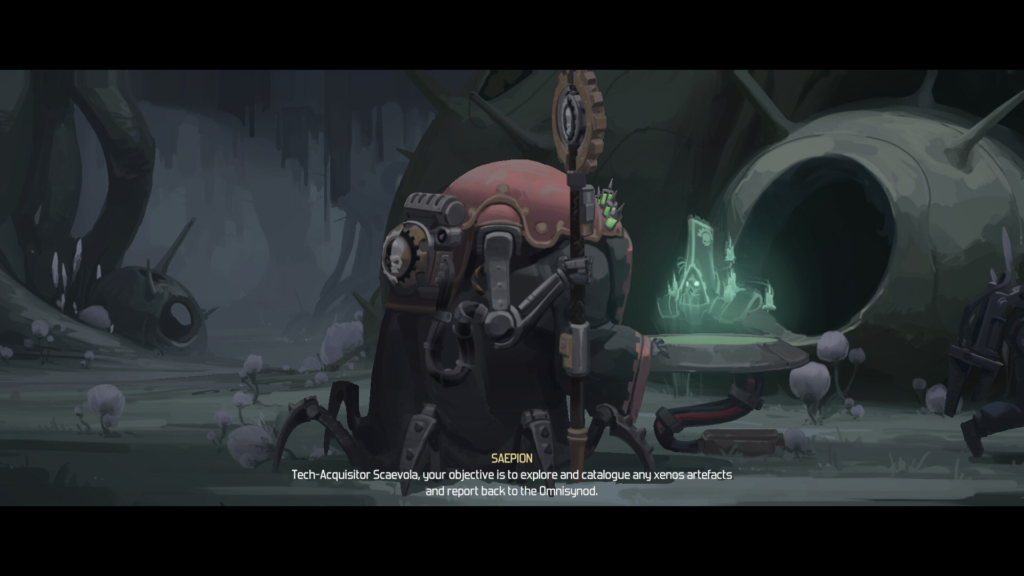
A great deal of the negativity surrounding this game stems from a misconception worth addressing directly, because the marketing and the opening hours actively encourage it. Many players have claimed Tech-Priest customisation has been removed entirely. It has not. It is simply locked behind progression and tucked away where it is easy to miss.
The named characters from the first game now function as your Tech-Priest units, each with custom upgrade trees and distinct models that genuinely look excellent. Customisation parts unlock by completing specific missions. Every priest eventually has access to the full range of part options — Khepra begins with a medical mechadendrite, Captrix with an optical one, but both can acquire either over time. Each priest also corresponds to one of the base classes from the 2018 game, with an expanded class tree and the armour components mostly stripped out. Levelling grants two picks from the whole tree, respeccable at any time.
The problem is presentation. The first several missions lock you sequentially into using specific characters to introduce the cast, which is tedious — especially since you earn upgrades for each that you cannot immediately experiment with. The game does itself a real disservice by hiding its depth behind a slow, scripted opening that leaves many players believing systems are absent when they are merely delayed.
A Tabletop Sensibility
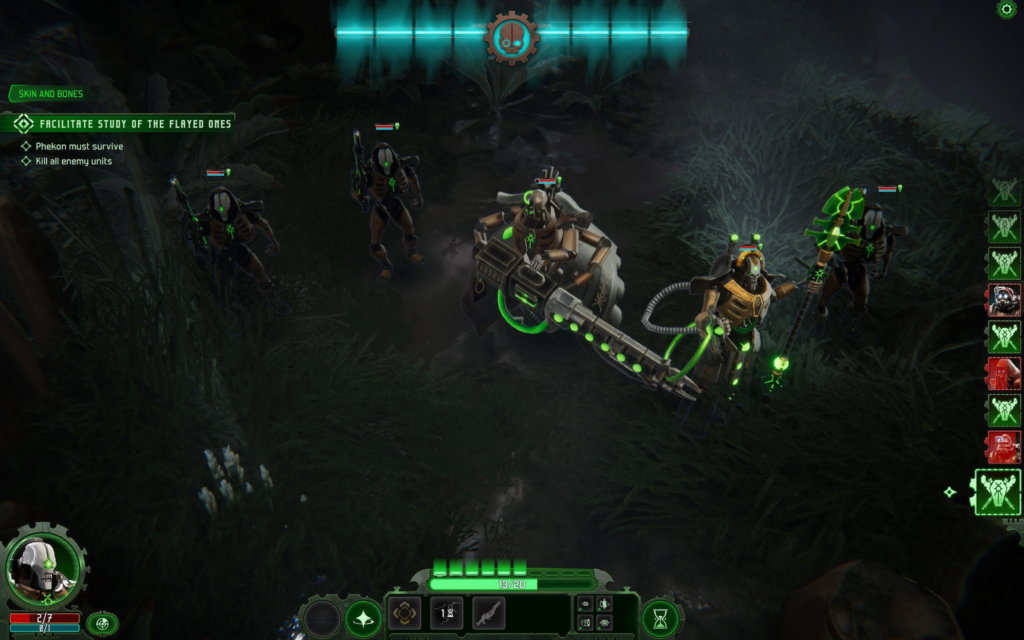
The faction design leans harder into a tabletop wargame feel than the original ever did. You assemble a pseudo-army composition and upgrade unit types by attaching a sergeant, a special weapon, or similar enhancements. It is a satisfying system that rewards thoughtful force-building before a mission rather than purely in-the-moment tactical play.
The two factions play meaningfully differently. The Mechanicus revolves around support units and a resource system that gently penalises leaning too heavily on your most expensive options — though that resource is dedicated to those units, which softens the sting. The Necrons are divided into cohorts, and here one design choice does grate: duplicate units must be upgraded separately within each cohort, which feels redundant. Environmental mechanics also differentiate the factions, with the Mechanicus using terrain for cover while the Necrons simply destroy it.
The Rough Edges
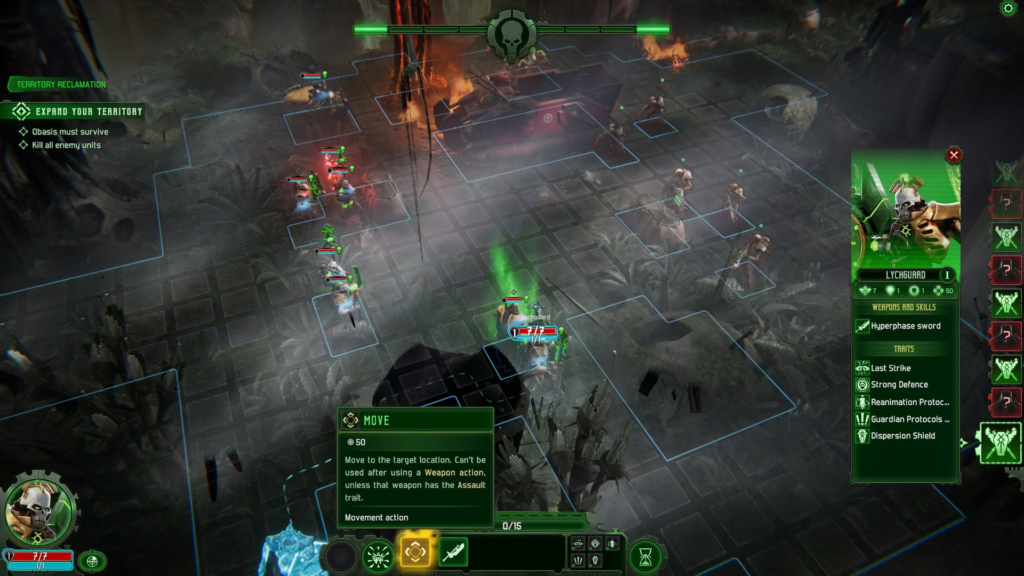
This is where Mechanicus II earns its mixed reception, and the criticisms are legitimate. The randomisation of enemy positions and composition on mission restarts makes recovering from mistakes frustrating — reinforcements arrive in random locations, occasionally spawning next to your Leader and ending a run abruptly. The in-mission choice system shows you the risk of a decision (more enemies) but not the reward until after you have committed, which makes those choices feel like guesswork rather than informed gambles.
Performance is inconsistent in a way that does not track cleanly with hardware. Some players with capable rigs report crashes, long battle load times, and overheating, while others on comparable specs run the game smoothly. On my system it ran without significant strain, which suggests driver conflicts may be at play, but the volume of complaints indicates a real optimisation problem for a meaningful portion of players. Setting fog to its lowest option is a commonly cited workaround worth knowing.
Some units suffer from missing or non-fluid animations, with actions occasionally snapping from start to finish in a single frame. The narrative, penned by Black Library veteran Ben Counter, is serviceable but the in-mission dialogue at interest points leans heavily on techno-gibberish that rarely feels consequential. The soundtrack by Guillaume David is atmospheric but, by the assessment of many returning players, a step down from the first game’s memorable organ-heavy work.
Is it worth playing now?
Warhammer 40,000: Mechanicus II: Warhammer 40,000: Mechanicus II is not Mechanicus, and it is never going to be. Judge it as a failed attempt to recreate the original and you will come away disappointed. Judge it on its own terms and you will find an excellent Warhammer strategy game built around the Adeptus Mechanicus, the Necrons, and the cast of the first game — one that retains some of its predecessor's design principles while adding a substantial amount of new material. – Tom Henry
It is harder, more attrition-focused, and more tabletop-flavoured than what came before, with a genuinely satisfying tactical core once it finally opens up. It is also rough in places — randomness that occasionally feels unfair, opaque choice mechanics, inconsistent performance, and a clumsy opening that obscures its own depth. The bones are strong, and the systems that frustrated me early became the systems I appreciated most by the midgame. If Bulwark addresses the technical issues through patches, this could grow into something that stands proudly beside the original rather than in its shadow.