






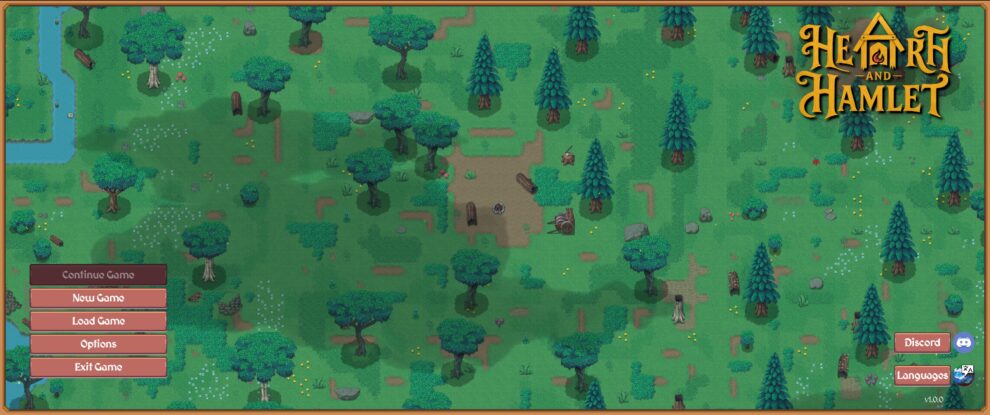
There’s a particular satisfaction in watching numbers climb, resources accumulate, and a humble campfire slowly grow into a sprawling settlement. Hearth and Hamlet, developed by Phorust Studios, promises exactly that: a cozy medieval incremental city builder where you start with a campfire and build a kingdom. It largely delivers on the cozy incremental part. The city builder part is where expectations and reality quietly part ways, and how much that bothers you will determine whether this charming little game is a relaxing evening or a mild disappointment.
From Campfire to Kingdom
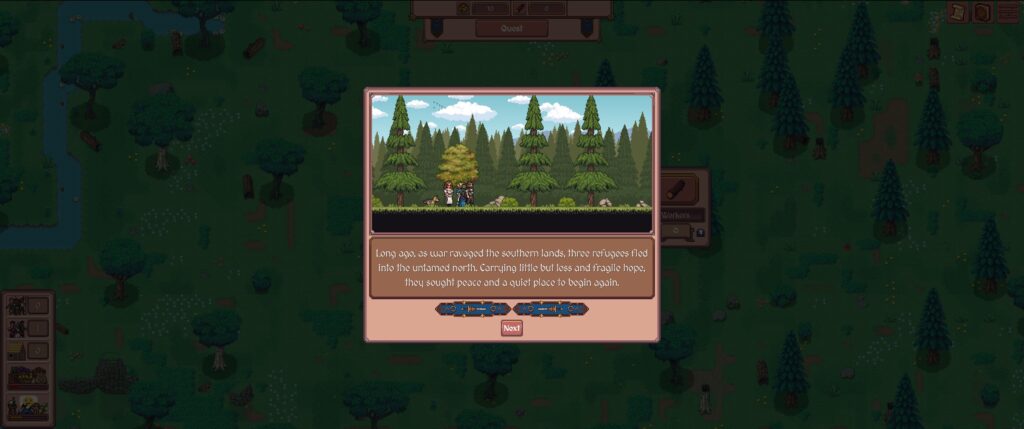
The premise is straightforward and appealing. You begin with almost nothing and gradually transform a quiet frontier camp into a thriving medieval kingdom rendered in charming pixel art. You gather resources like food, wood, stone, and gold, assign workers to production, construct buildings, and feed everything into a research tree that permanently unlocks new technologies, policies, and eventually magic.
The core loop is genuinely satisfying in that specific way incremental games can be. You need wood, then suddenly you need gold, then stone becomes the bottleneck, and everything feeds back into itself in a chain of small, rewarding decisions. Allocating workers and shuffling priorities as your needs shift is the real heart of the experience, and for players who enjoy the meditative rhythm of resource management, it scratches that itch effectively. The research tree gives you a steady sense of progression, and there’s almost always something worth working toward.
The game also offers meaningful difficulty options. Playing on higher settings like Challenging or Very Hard shifts the real challenge into resource management and strategy rather than any twitch reflexes, which keeps the cozy tone intact even when the game demands more of you. A completionist run on the hardest difficulty takes genuine patience and planning. Normal mode clocks in around nine to sixteen hours depending on your pace, which is a reasonable amount of content for the modest price.
Cozy Presentation, Relaxing Vibe
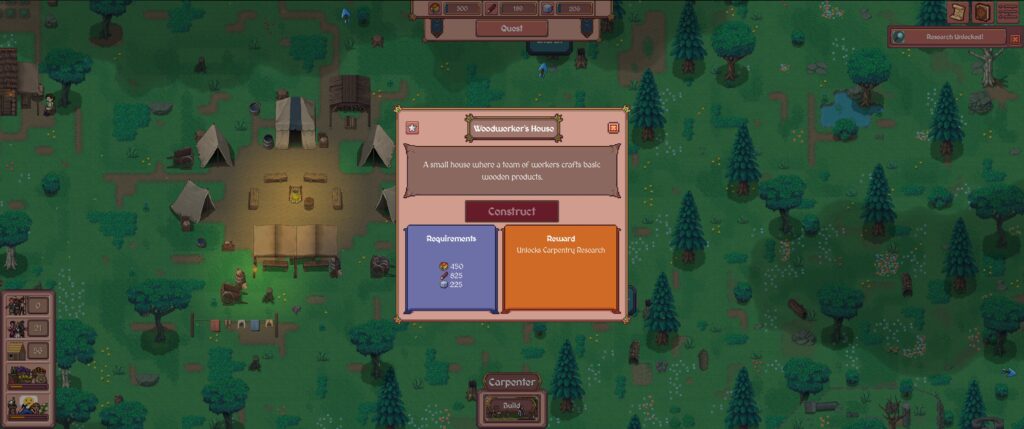
Where Hearth and Hamlet consistently shines is atmosphere. The pixel art is genuinely charming, depicting lakes, rivers, magical swamps, and faraway lands with a warmth that makes the world pleasant to inhabit. Comparisons to the Stardew Valley aesthetic are not unwarranted, and watching your settlement visually evolve from a cluster of tents into a proper kingdom with castles, taverns, and magical academies provides real satisfaction.
The soundtrack deserves particular praise. It’s relaxing, atmospheric, and does an excellent job reinforcing the game’s cozy identity. On Steam Deck the game reportedly runs perfectly, making it a natural fit for handheld, laid-back sessions.
The magic and trade systems add welcome dimensions as your kingdom advances. Alchemical labs and magical academies open new possibilities, while establishing trade routes with neighbouring kingdoms lets you grow your economy beyond what your local terrain provides. Trade, in particular, is one of the few systems that genuinely rewards a moment of strategic thought.
Where Expectations Collide With Reality
Here is the central tension, and it’s one worth being honest about before you buy. Hearth and Hamlet is tagged and marketed as a city builder with idle and management elements, and in practice it is really a clicker with a city-builder skin. If you go in expecting to design your settlement, you will likely be disappointed.
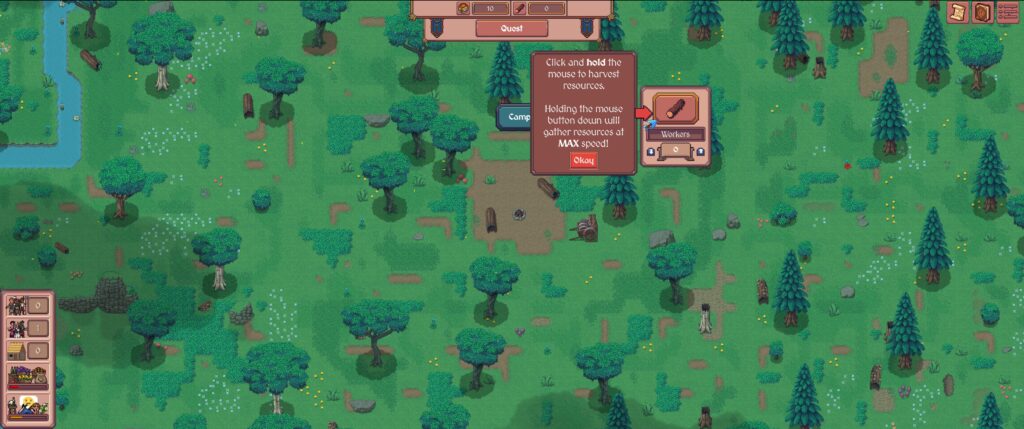
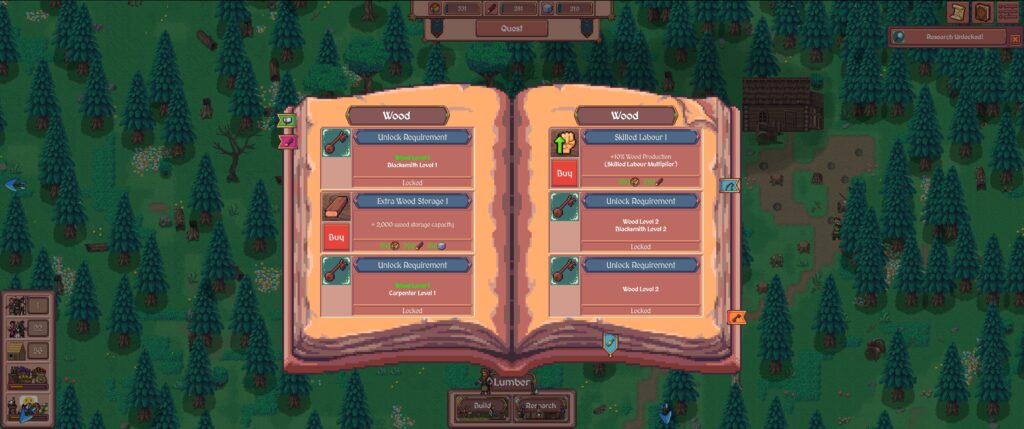
There is essentially no control over layout. You don’t choose where buildings go, how roads are arranged, or how your city is designed. When you construct a carpenter’s building or anything else, it appears in a predetermined location as a fixed image. For players drawn to the creative, spatial joy of arranging a settlement, this absence guts one of the genre’s core pleasures. Several players expected to build their town and instead found themselves clicking on wood nodes like it was Minecraft, with the buildings already placed for them.
The idle element is also thinner than the tags suggest. Passive resource generation often isn’t enough to keep pace, which means you’re frequently clicking manually to gather what you need rather than leaving the game running and returning to progress. The result sits awkwardly between genres: not idle enough to be a true idle game, not hands-on enough in the building department to be a real city builder. Resource generation can ramp up to the point where you have no time to pause, constantly upgrading to avoid overflowing storage, which runs counter to the relaxing idle experience the marketing implies.
Interface and Convenience Frustrations
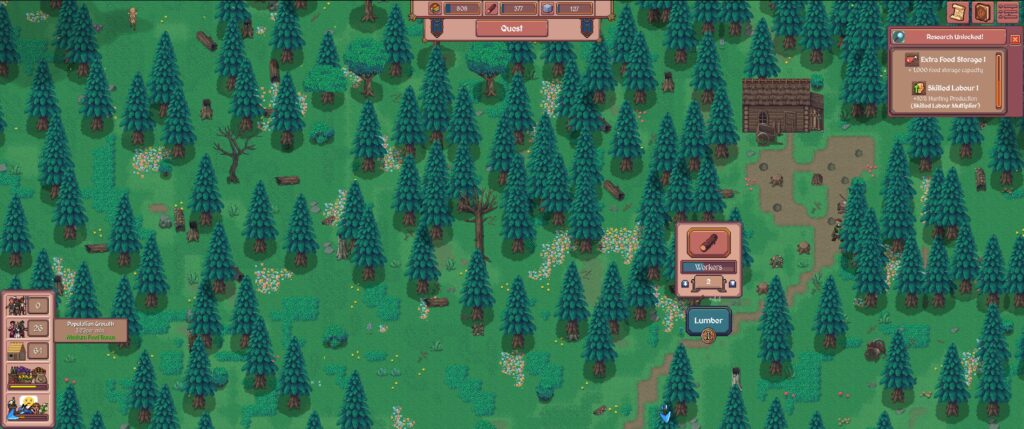
The other consistent complaint concerns quality-of-life design. Resources and production are scattered across the interface rather than consolidated, so managing your economy involves a lot of clicking back and forth. The research tabs aren’t grouped together neatly, making the tree more cumbersome to navigate than it should be. In the late game, finding what to upgrade next becomes genuinely confusing as the screen fills with options and information.
A unified management interface, where you could directly control worker allocation and trade from a single screen, would transform the experience and push it closer to the true idle game many players want. As it stands, managing worker numbers means clicking around the map, and trade must be handled at the market itself.
There are also smaller irritations. The forced taxation mechanic, which lowers citizen happiness and production output each time it triggers, annoys players who wanted a purely relaxing experience. The mandatory militia with rising upkeep costs to defend against enemy attacks similarly undercuts the chill promise for those who just wanted to build in peace, and players trying to play slowly and idly sometimes find themselves unable to defend against incursions. Some players report stuttering and disk usage spikes that worsen as the game progresses, likely tied to constant autosaving.
Is Hearth and Hamlet Worth Playing?
Hearth and Hamlet: Hearth and Hamlet is a genuinely pleasant incremental game with a charming pixel art world, a relaxing soundtrack, and a satisfying resource-management loop that will absolutely click with the right player. At its low price point it offers a reasonable amount of content, meaningful difficulty options, and hours of cozy number-climbing progression. For fans of clickers and incremental games who enjoy juggling resources and watching a settlement grow, it's an easy recommendation and a lovely way to spend a few evenings. – Tom Henry
The caveat is important, though. This is not the city builder its tags imply. You don’t design your town, the idle mechanics are underbaked, and the interface could use real consolidation. If the creative act of building a city is your main draw, or if you want a true set-it-and-forget-it idle game, Hearth and Hamlet will frustrate you. Go in understanding it’s a cozy incremental clicker first and foremost, and you’ll find a warm, satisfying little game. Go in expecting to architect a kingdom, and you’ll wonder where the city builder went.