





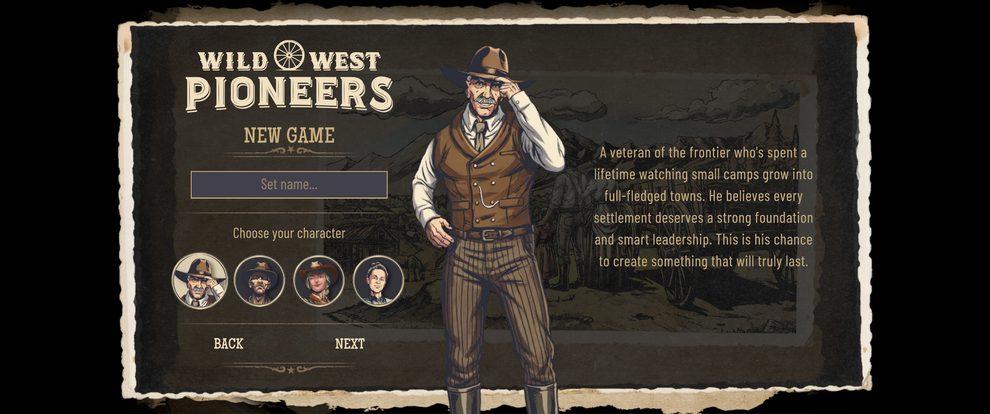
There is something comforting about a good city builder. You start with almost nothing, place the first few buildings, gather some basic resources, and slowly turn an empty piece of land into a functioning settlement. Wild West Pioneers understands that appeal, but it adds a rather important complication: on the frontier, every little success creates another problem.
At first, I thought I was simply building a Western town. A few houses here, a production building there, maybe a road connecting everything together. Then I noticed that my workers were spending absurd amounts of time walking between buildings, my food reserves were shrinking faster than expected, and one badly positioned warehouse was quietly sabotaging an entire production chain. That was the moment the game clicked for me. Wild West Pioneers is not really about placing buildings. It is about managing distance.
The Frontier Runs on Foot
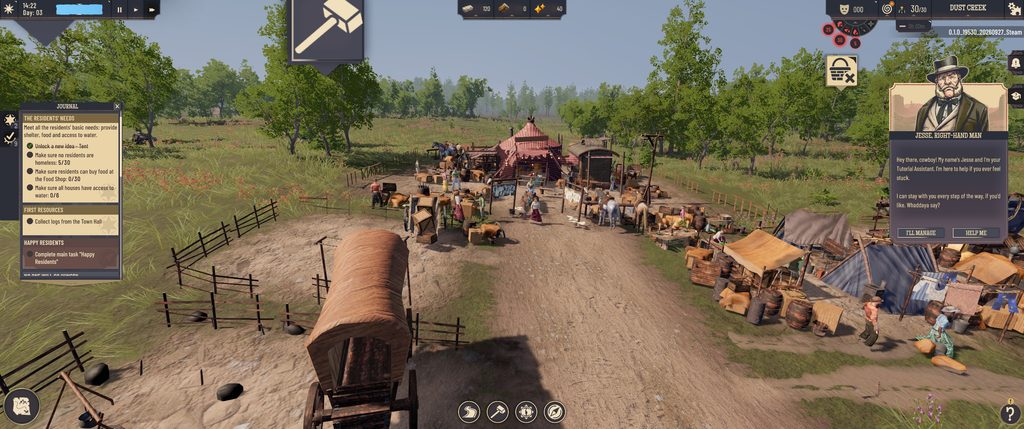
The most interesting part of the game is its logistics. Resources are not just abstract numbers increasing somewhere in the background. Someone has to gather them, someone has to transport them, someone has to process them, and eventually someone else has to deliver the finished product where it is needed. This makes the layout of your settlement surprisingly important.
A lumber mill next to a forest makes obvious sense, but what happens afterwards matters just as much. Where does the wood go? How far is the storage building? Where is the workshop that needs it? How much time are workers wasting simply moving materials around? I found myself redesigning parts of my settlement not because they looked bad, but because I realized that half of my workforce was effectively employed as professional walkers.
That creates one of the game’s best ideas: time is arguably more valuable than resources. A badly planned building does not simply cost money. It costs the working hours of your settlers over and over again. Once I understood that, roads, storage facilities and production chains became much more interesting.
I Started Caring About Individual Settlers
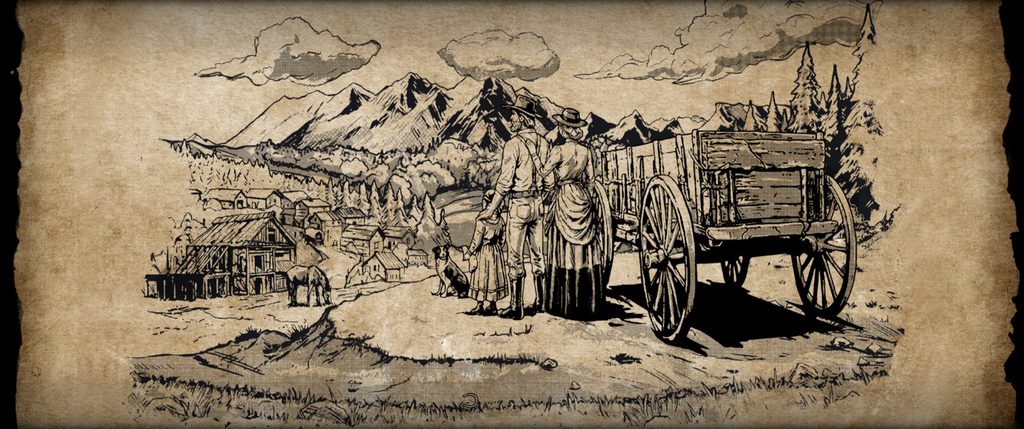
Another pleasant surprise is how much better the settlement feels when people are actually visible and moving through it. In many city builders, inhabitants are essentially statistics. You need 50 workers, so the game gives you 50 workers.
Wild West Pioneers makes them feel more tangible. They walk to work, carry goods, move between buildings and respond to the needs of the settlement. Food, housing and employment therefore feel like actual systems rather than values hidden inside a menu.
This creates a funny contradiction. At the beginning of a new settlement, I desperately want more people because I need workers. Later, I start looking at every new arrival with mild suspicion because every additional person needs food, housing and employment. The game’s population growth therefore feels like a reward and a burden at the same time.
That is a surprisingly effective way of making the town feel alive.
It Is a Western, But Guns Aren’t the Point
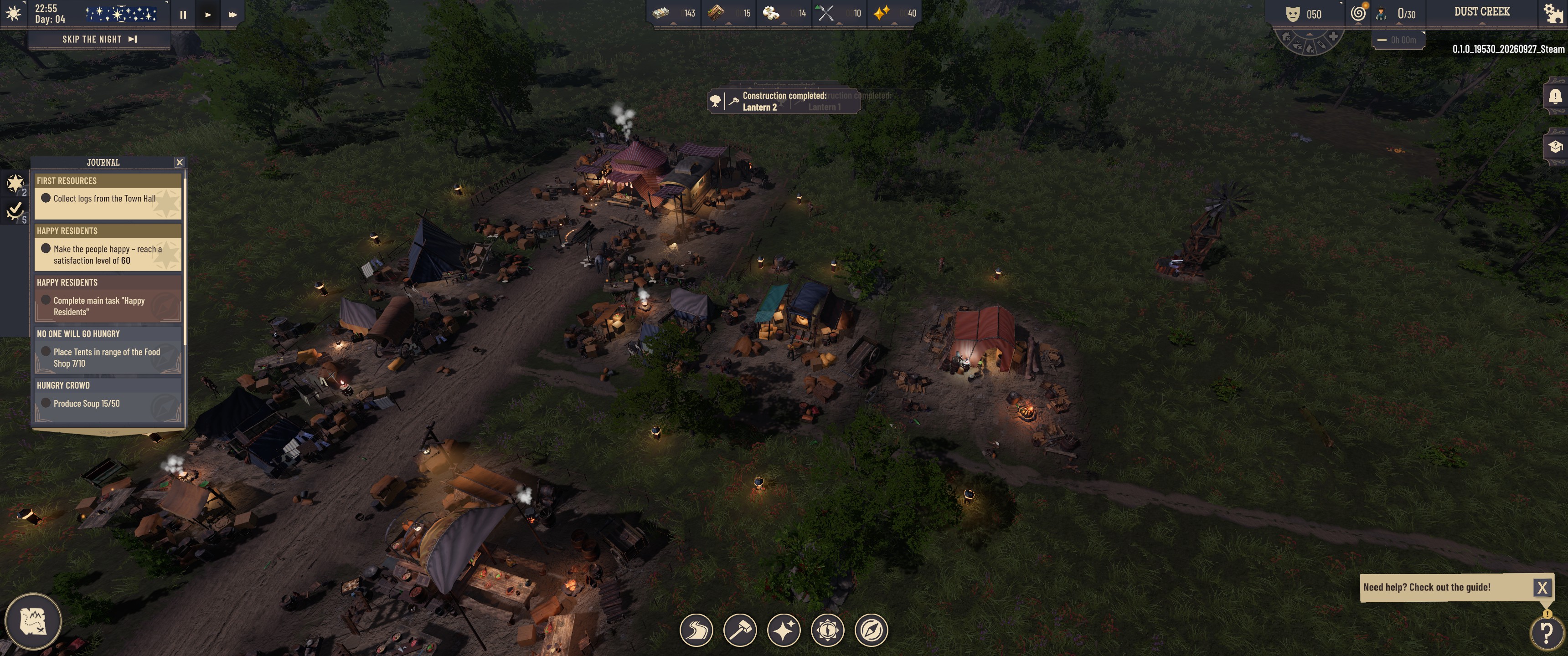
The title promises the Wild West, but this is not a game constantly throwing bandits and shootouts at me. Most of my time is spent solving economic problems, organizing production and trying to make the settlement more efficient.
I actually like that approach. The frontier becomes dangerous because it is fragile, not because someone attacks every few minutes. Security, law enforcement and threats such as outlaws and wildlife become part of the larger management system instead of being constant interruptions.
There is something satisfying about seeing the Sheriff become important only when my settlement grows enough to need him. It makes the fantasy feel less like a Western theme park and more like a community slowly becoming a real town.
Expansion Changes the Entire Game
The first settlement teaches me how to survive. The next one teaches me how to think.
Exploration gradually opens up a larger world map, with new areas, resources and opportunities for additional settlements. This is where Wild West Pioneers starts to become more interesting than a straightforward city builder. Expansion does not simply mean making one giant town. It allows me to develop several smaller settlements that can serve different purposes.
One can focus on farming. Another might be built around mining. A third can become a trading hub or a source of materials that the other settlements desperately need.
I really like this because it changes the question from “How do I make my city bigger?” to “How do I make my entire frontier work?”
That is a much more interesting strategic problem.
The Ideas System Keeps Progression Moving
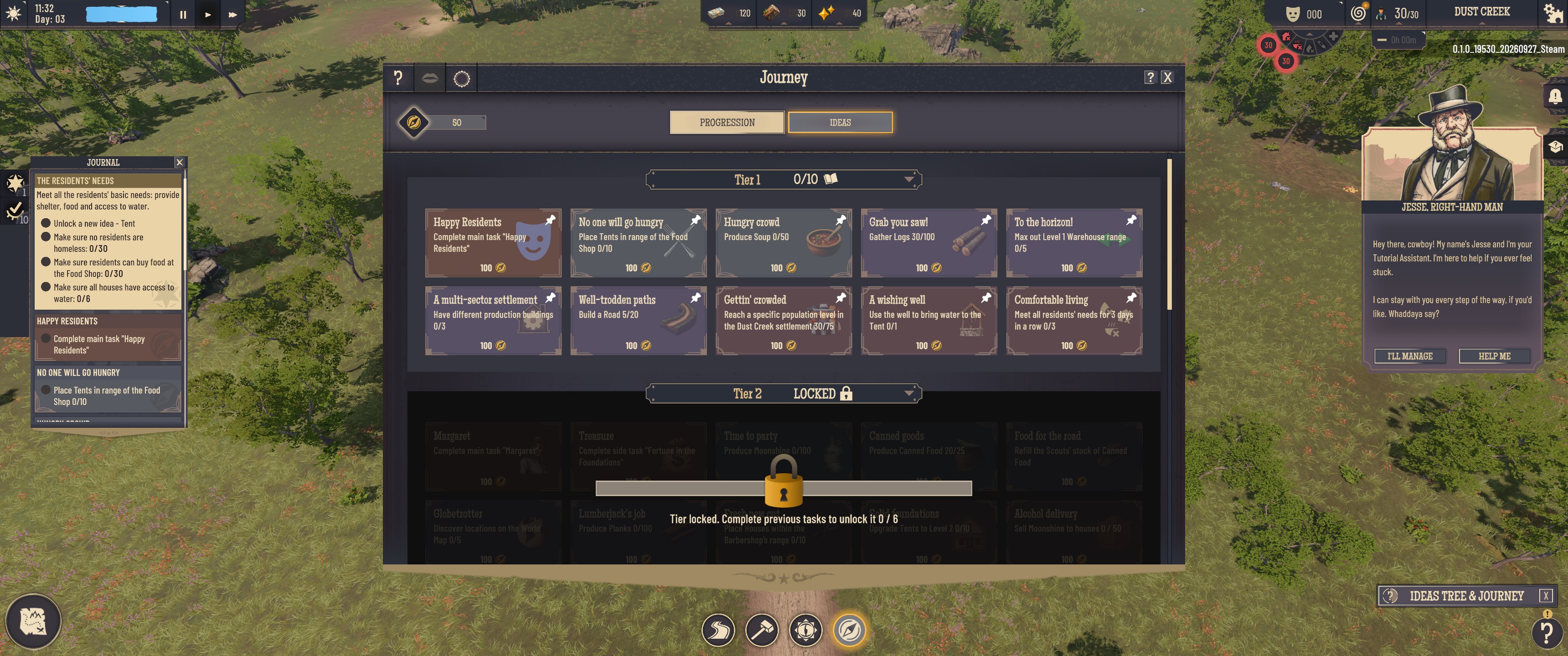
The technology system is straightforward, but it fits the rest of the game well. New Ideas unlock additional buildings and opportunities, while individual structures can also receive upgrades that improve their usefulness.
What I like here is that progression does not always force me forward. Sometimes the smarter choice is to stop expanding and improve what I already have. That creates small but meaningful decisions between investing in the next stage of development and making the current economy more efficient.
It is not the deepest technology tree I have ever seen, but it supports the game’s central philosophy nicely: growth should come with consequences.
The Best Stories Are Accidents
The official narrative gives the game a clear direction, but the stories I remember most were the ones I created accidentally.
A settlement running out of food because I expanded too quickly. A mine that looked like a brilliant investment until I realized how awkwardly far away it was. A warehouse that turned into the single most important building in town. A new wave of settlers arriving at exactly the wrong moment and forcing me to completely rethink my plans.
These moments are more memorable than scripted objectives because they belong to my particular settlement.
That is where Wild West Pioneers has the most potential. The game can create small frontier stories without explicitly writing them.
My favorite character is often the building I placed in the wrong location three hours ago.
The Western Atmosphere Needs More Consistency
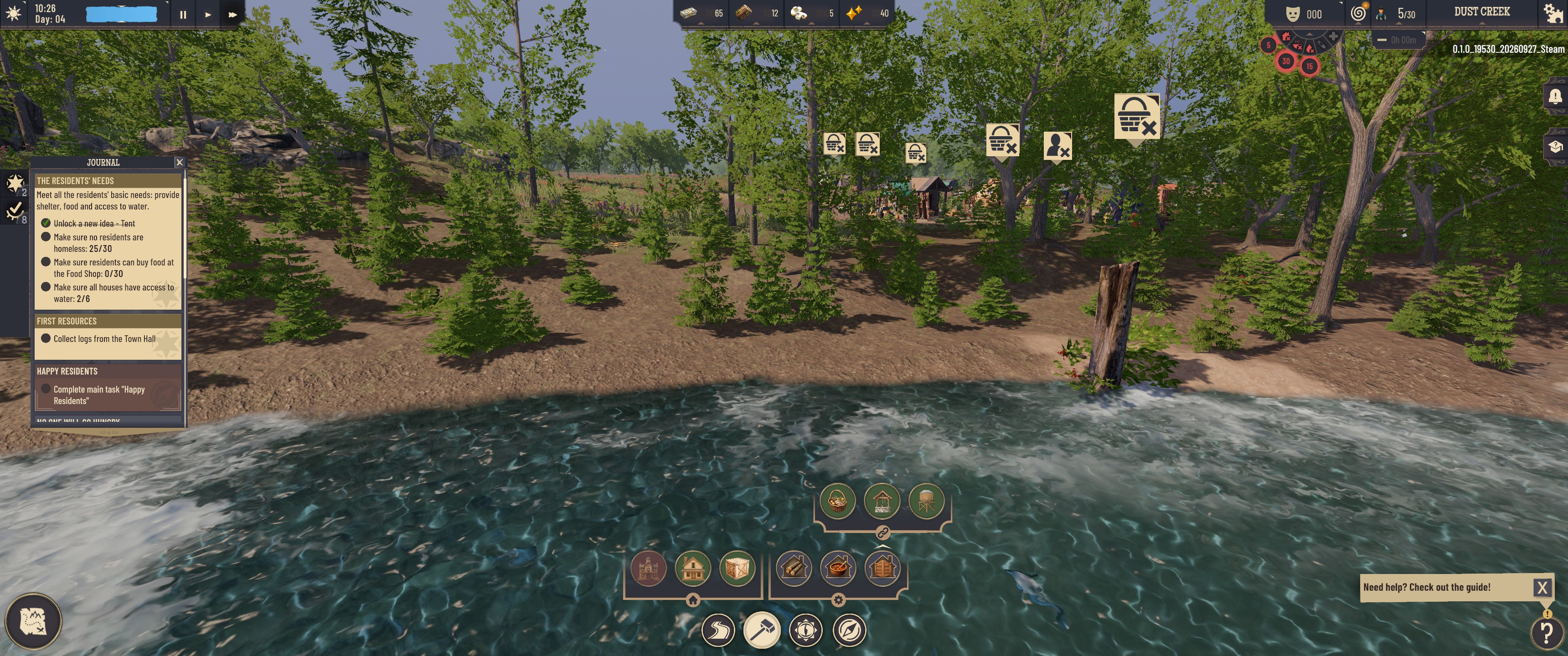
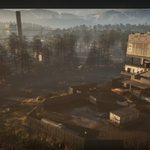
The setting generally works, but this is one area where I think the game could do better. Once the settlement begins to develop, the combination of wooden structures, dirt roads, production buildings and frontier architecture creates the right feeling. However, some early areas can look surprisingly generic.
I occasionally found myself staring at the screen and thinking less about the American frontier and more about a conventional colony sim with Western decorations.
The later the game gets, the more convincing the atmosphere becomes. I just wish the first hours sold the fantasy more aggressively.
Early Access Is Impossible to Ignore
This is an Early Access game, and it feels like one.
The underlying systems are promising, but interface problems, pathfinding issues and some rough edges become more obvious as the settlement grows. Workers occasionally make strange routing decisions, and larger towns can put more pressure on performance. There are also places where the presentation simply lacks the polish I would expect from a finished strategy game.
At the same time, the development process gives me some reason to be optimistic. The team has already made changes based on player feedback, including adjustments to the opening experience and various systems that were criticized during earlier testing.
That is exactly what I want to see from an Early Access project. Not perfection, but evidence that the developers are paying attention to where the game’s systems are failing.
My Biggest Takeaway
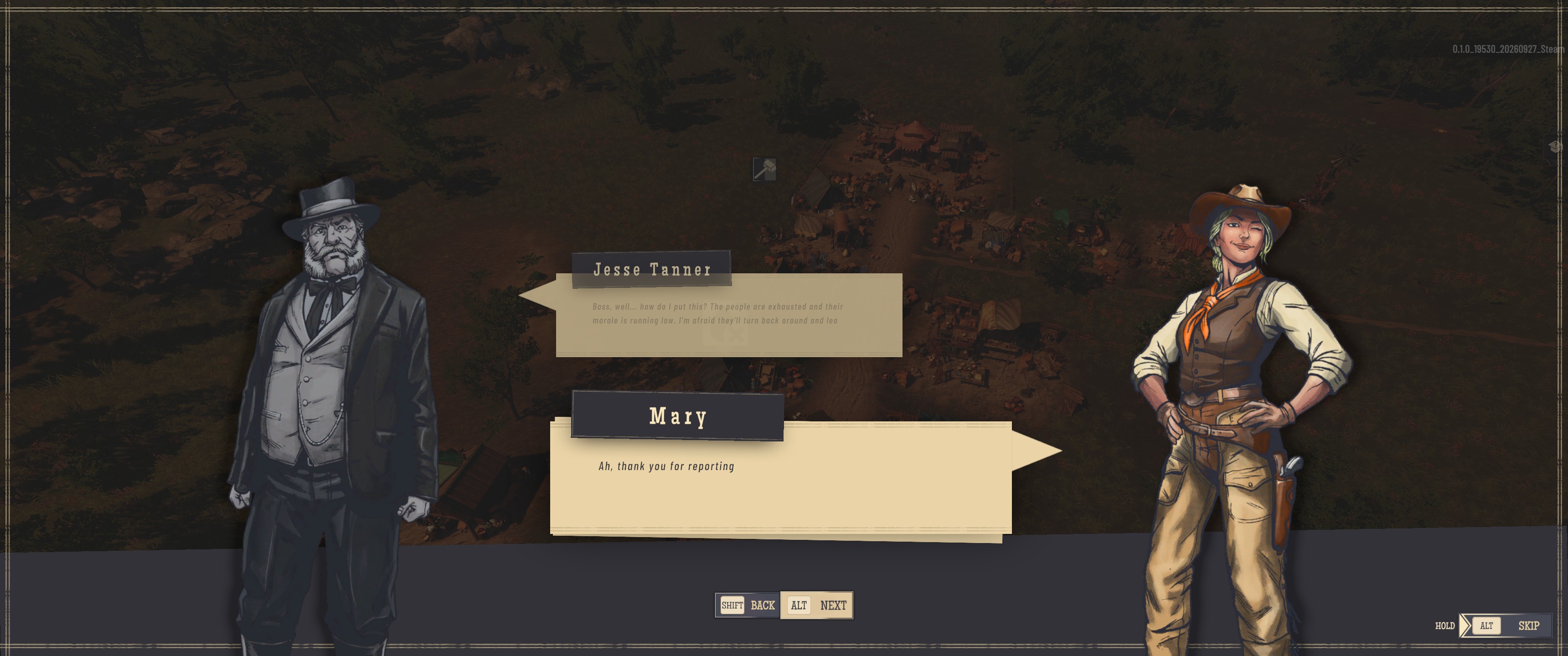
After spending time with Wild West Pioneers, I think its most interesting idea is not actually the Wild West.
It is the inconvenience of building civilization.
Every solution creates another problem. More workers increase production, but also increase consumption. A new mining operation provides valuable resources, but now those resources have to travel further. A second settlement creates new opportunities, but it also creates another place that needs to be supplied.
That sounds simple, but it gives the game an unusually convincing sense of progression.
You are not becoming more powerful.
You are becoming responsible for more things.
And somehow, that is more satisfying.
Verdict
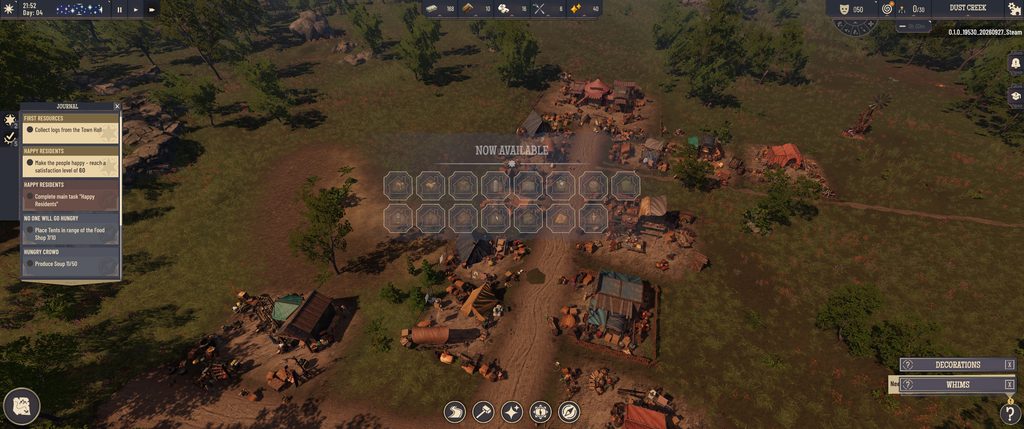
Wild West Pioneers is not a finished game yet, and I would not pretend otherwise. There is still plenty of work to be done on pathfinding, interface design, performance, pacing and the overall depth of some systems.
But the foundation is strong.
The logistics are satisfying, expansion has a genuine strategic purpose, settlers feel like active participants in the settlement, and the combination of city building and world exploration gives the game room to grow into something much larger.
Most importantly, it has managed to make me care about things I normally ignore in strategy games. I care how far my workers have to walk. I care where I put the warehouse. I care whether a new town is close enough to a resource to justify building it at all.
That might sound mundane.
It isn’t.
In a good city builder, mundane decisions become the entire game.
Pros
- Excellent physical logistics and production chains
- Settlers feel like part of the settlement rather than simple statistics
- Expansion into multiple settlements adds real strategic depth
- Relaxed pace allows room for planning
- Strong potential for emergent stories
- Solid foundation for future Early Access updates
Cons
- Pathfinding still needs considerable work
- Interface can become cumbersome
- Performance can suffer as settlements grow
- Early areas do not always deliver a strong Western atmosphere
- Some systems need more depth and variety
Wild West Pioneers: Wild West Pioneers is not yet the definitive frontier city builder, but it already understands something many games in the genre forget: building a town is not the interesting part. – Tom Henry
Keeping it alive is.