









Pool has always been a game about removing possibilities. Every ball you sink makes the table simpler.
Ultrapool flips that idea upside down. The more balls disappear, the more ridiculous the table becomes. A ghost duplicates itself, a chicken lays eggs, bombs start bouncing between pockets, and suddenly I’m no longer playing billiards. I’m conducting a physics experiment that somehow keeps rewarding increasingly terrible ideas.
It’s one of the freshest indie concepts I’ve played this year. The premise sounds like a joke. The execution is anything but.
The table becomes your build

Calling Ultrapool “Balatro with pool” is accurate, but it also undersells what’s actually happening. Roguelikes usually ask me to build a deck, an inventory, or a character. Here, I build a table.
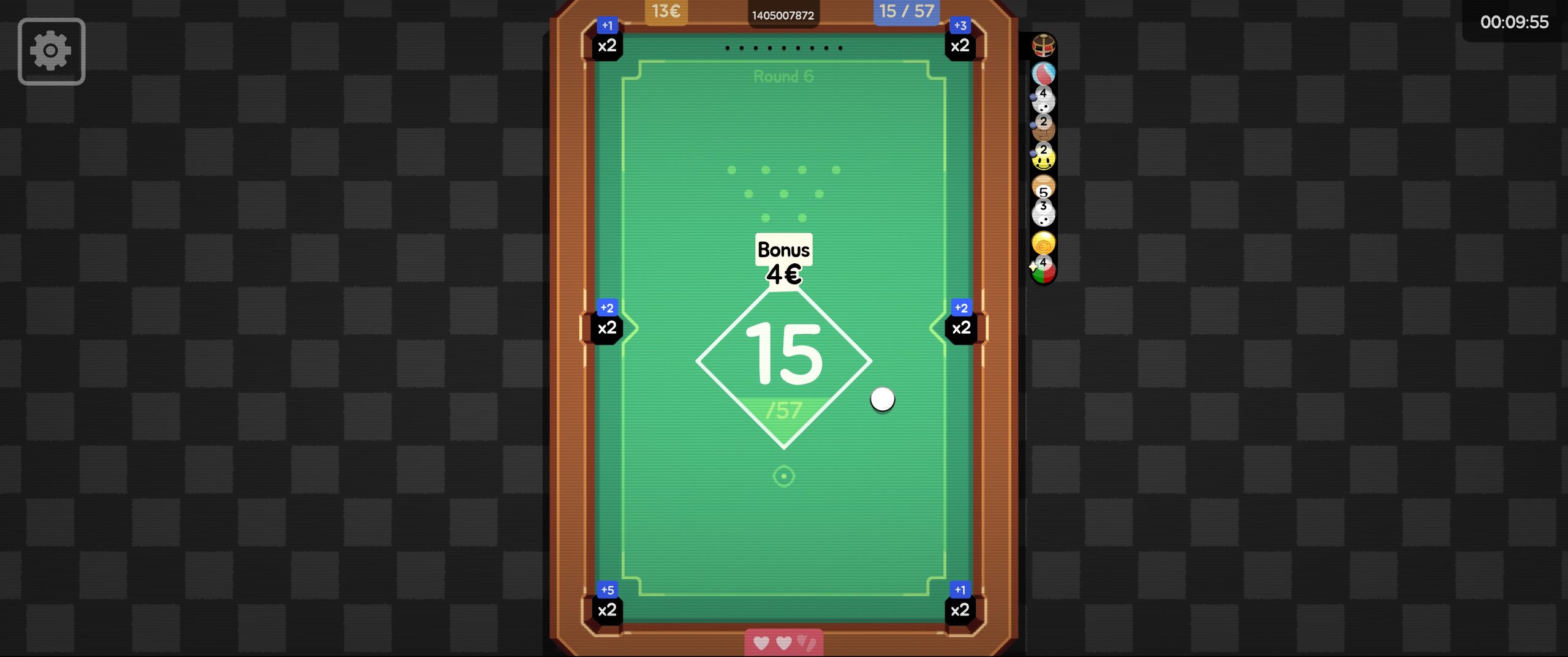
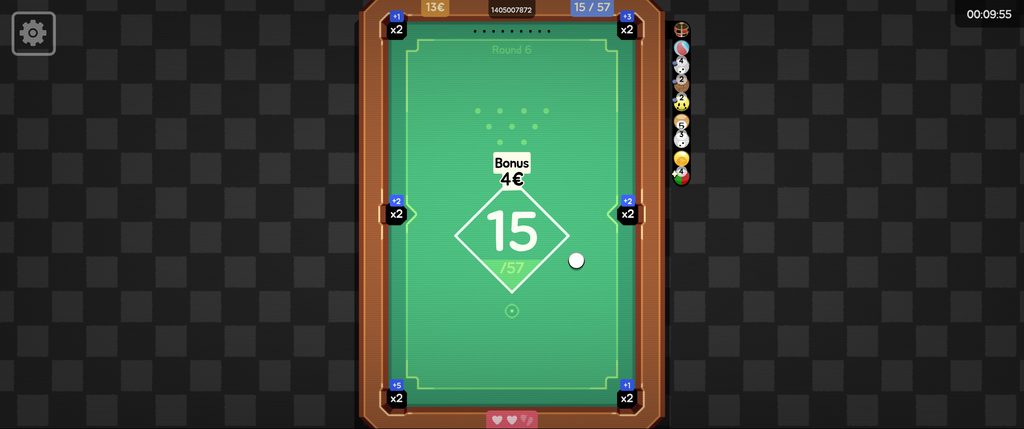
Every special ball permanently changes the language of future shots. A planet bends trajectories. A magnet rewrites positioning. A bomb isn’t just damage, it’s a movable trigger waiting for the right collision. Instead of asking, “What’s my strongest card?” I’m asking, “What happens if I intentionally miss this pocket?”
That’s a much stranger question, and a much more satisfying one.
Failure looks spectacular
Most strategy games punish mistakes by ending the run. Ultrapool does something cleverer.
Bad shots often create beautiful accidents.
I’ve had runs where a completely scuffed hit bounced through three cushions, launched a bomb into a chicken ball, spawned eggs across the table, and accidentally produced my highest scoring combo of the evening. The game constantly blurs the line between skill and improvisation. You stop chasing perfection and start recognizing opportunity inside chaos.
It captures something real about billiards. The best players control the table. Ultrapool asks whether you can control unpredictability instead.
The bartender is the real progression system
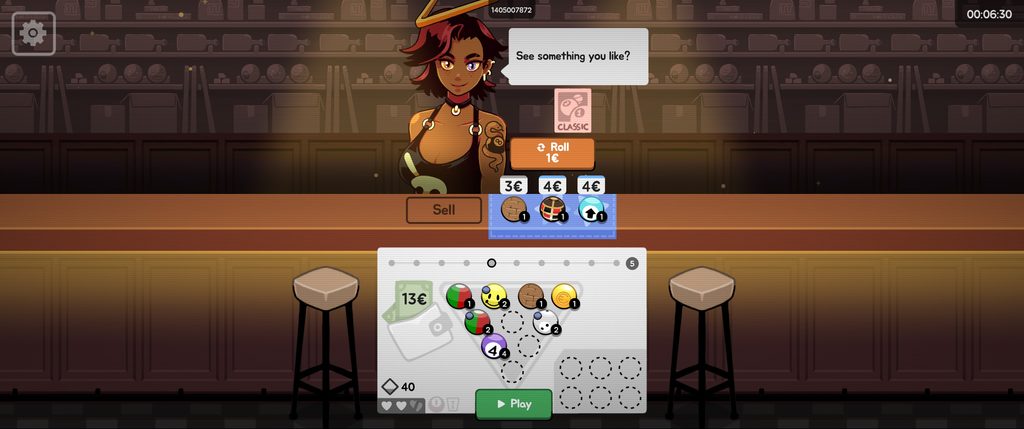
Between rounds, I head to a cocktail bar where money becomes experimentation. Buying upgrades is interesting, but mixing two balls into an entirely new creation is where the game truly comes alive. The bartender feels less like a shopkeeper and more like a mad scientist handing me increasingly dangerous toys. The result is a progression loop that encourages curiosity instead of optimization.
Some of my strongest builds came from combinations that looked completely useless on paper. That’s rare. Many roguelikes secretly want players to discover one optimal strategy. Ultrapool rewards the player who says, “This sounds stupid… let’s try it.”
Surprisingly readable chaos
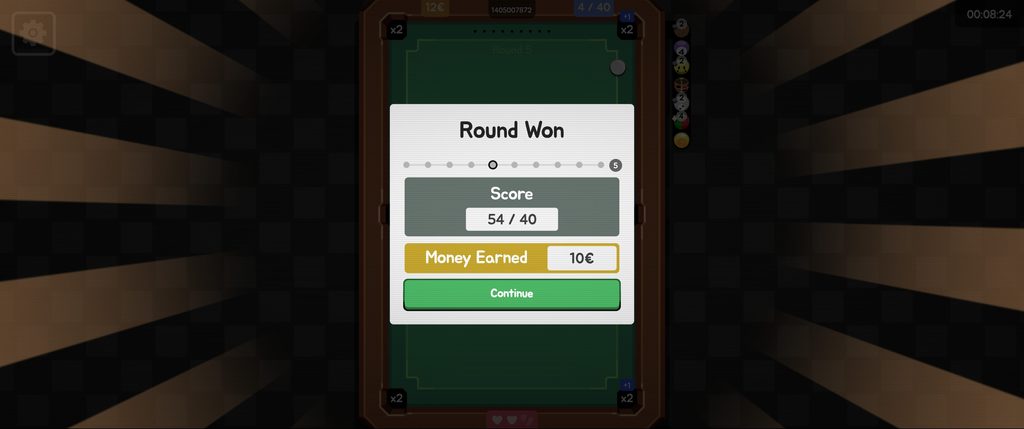
With dozens of effects firing at once, the game could have become visual noise. Instead, its comic-book presentation keeps everything remarkably clear. Every ball has a distinct silhouette and color identity, making chain reactions easy to follow even when the screen erupts into absolute nonsense.
The soundtrack deserves credit too. It’s relaxed, almost lounge-like, which creates a hilarious contrast with the increasingly catastrophic physics unfolding on the table.
The ceiling arrives sooner than I’d like
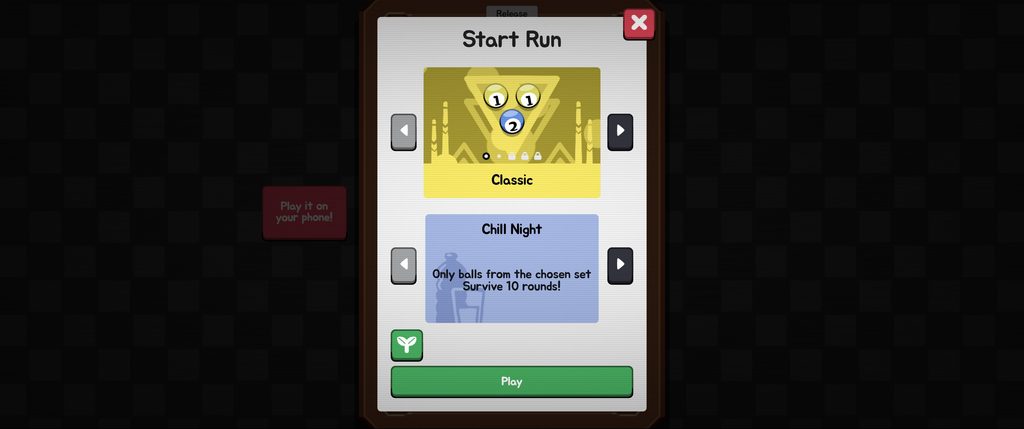
For all its creativity, Ultrapool eventually reveals its limits. After enough runs, certain synergies appear more consistently powerful than others, and some late-game decisions become predictable. The foundation is exceptional, but it’s also the kind of game that could double its lifespan with more balls, stranger modifiers, and weirder table layouts.
The encouraging part is that the core design is already strong enough to support years of expansion.
Final Verdict
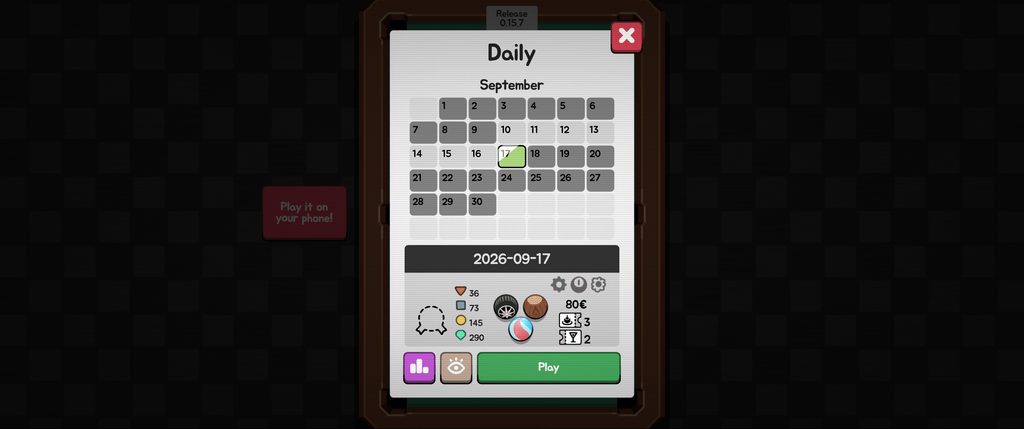
The biggest surprise wasn’t discovering that pool could become a roguelike. It was realizing that billiards might actually be a better roguelike foundation than cards.
Cards are abstract. Pool is physical. Every decision has weight, momentum, and geometry. Your build isn’t sitting in a menu, it’s rolling across felt in real time, colliding with systems you’ve created yourself.
Ultrapool isn’t trying to simulate billiards. It’s asking a far more interesting question: what if the pool table became a playground for impossible ideas?
The answer is dangerously addictive.
Pros
- Brilliantly original core concept
- Physics create genuinely creative decision-making
- Wild synergies encourage experimentation
- Accessible while offering surprising strategic depth
- Stylish, readable visual presentation
Cons
- Build variety plateaus after many runs
- Some combinations feel noticeably stronger than others
- The game leaves you wanting even more content
Ultrapool: Ultrapool turns one of the oldest tabletop games into one of the smartest modern roguelikes. Not by adding complexity, but by making every collision feel like a new possibility. – Tom Henry