






There is a particular kind of frustration that only a great puzzle game can produce. You stare at the screen, convinced that the solution must be obvious. You move a block, undo the move, try something else, and spend another ten minutes circling the same dead end. Then, suddenly, everything clicks. The answer was sitting in front of you the entire time, hiding behind an assumption you never realized you were making.
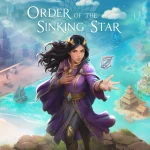
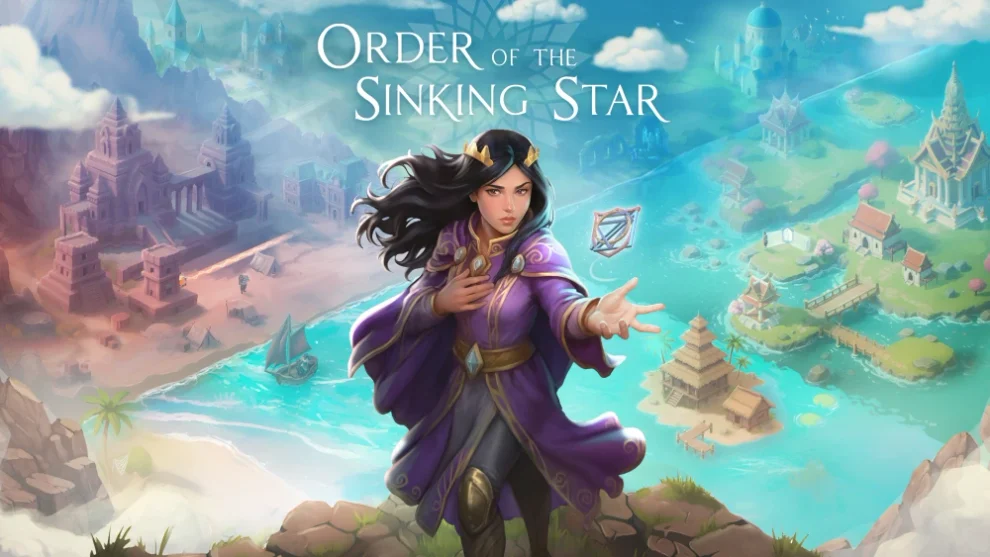
Order of the Sinking Star is built around that feeling, and it understands it better than almost any puzzle game I’ve played in recent years. Created by Thekla, the studio led by Jonathan Blow, the designer behind Braid and The Witness, this enormous puzzle adventure launched on PC on October 8, 2026. Its pitch sounds almost absurdly ambitious: more than 1,000 handcrafted puzzles, four distinct worlds, multiple playable characters, an interconnected overworld, and a mysterious narrative that gradually unfolds as you explore.
The surprising part isn’t that the game contains so many puzzles. It’s that so many of them feel as though they have something new to teach you. Order of the Sinking Star takes familiar ideas from grid-based puzzle games, builds entire systems around them, and then begins combining those systems in increasingly ingenious ways. The result is a game that can make moving a character across a handful of squares feel like a genuine intellectual achievement.
But there’s a catch. The same ambition that makes Order of the Sinking Star extraordinary also threatens to overwhelm it. Sometimes the game feels like an endless invitation to discover something wonderful. At other times, it feels like an invitation that simply refuses to let you leave.
Four Worlds, Four Different Ways to Think
At first glance, Order of the Sinking Star looks relatively simple. You explore a large, grid-based world, discover puzzle rooms, and solve their challenges to unlock new paths. There are no elaborate combat systems, no inventory management to worry about, and no complicated controls to master. Most of the time, you move characters around a board and interact with objects according to a handful of understandable rules.
Then you discover that those rules are only the beginning.
The game is divided into four major regions, each built around a distinct puzzle language. One focuses on heroes who manipulate objects by pushing and pulling them. Another introduces mirrors that change how characters move between separated areas. A third revolves around stones, water, and manipulating the environment to create a route forward. The fourth introduces gems and beams that grant abilities or alter the way the world behaves.
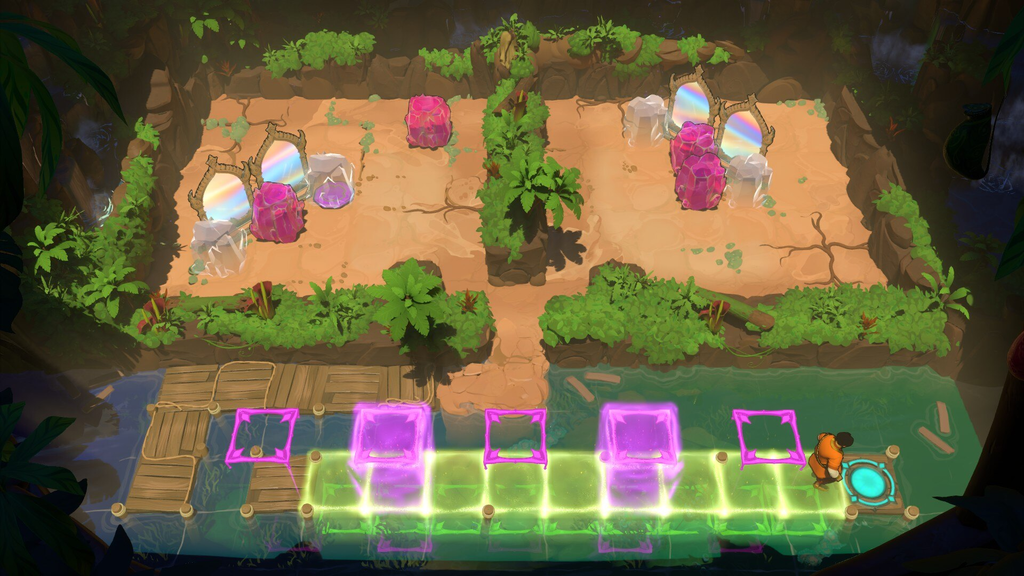
Individually, these ideas are easy enough to grasp. Their real strength comes from how much the game extracts from each one. A mechanic that seems to have exhausted its possibilities after twenty puzzles can suddenly introduce an entirely new complication, forcing me to reconsider what I thought I understood.
I particularly appreciate how the different regions encourage different habits of thought. One asks me to think several moves ahead and consider the consequences of pushing an object into a particular position. Another forces me to reason about spatial relationships and connections between seemingly separate locations. Switching between these worlds feels like switching between different kinds of mathematical problems, except the game communicates through movement and experimentation rather than equations.
Order of the Sinking Star doesn’t simply make puzzles harder. It repeatedly changes what being good at puzzles actually means.
The Most Important Skill Is Recognizing Your Own Mistakes
What separates an excellent puzzle game from an exhausting one is often the quality of its feedback. Players need to understand why an attempt failed, even if the game refuses to tell them what they should have done instead.
Order of the Sinking Star gets this balance largely right. Its controls are straightforward, its environments communicate their rules through objects and movement, and its rewind system encourages experimentation without making every mistake feel permanent. If I push something into the wrong position, I can undo the action and try another approach rather than restarting the entire puzzle.
That freedom fundamentally changes how I approach difficult rooms. Instead of trying to calculate every possible consequence before making a move, I can test a hypothesis, observe what happens, and refine my understanding. The game becomes a conversation between my assumptions and its rules. Every failed attempt gives me another piece of information, provided I’m willing to pay attention.
This is especially important because the puzzles can become extremely demanding. Some rooms require long sequences of moves, careful manipulation of several objects, or an understanding of how different mechanics interact. A single mistake can invalidate an otherwise promising solution, but the ability to rewind makes those mistakes productive rather than simply punishing.
The best moments come when I stop looking for a specific solution and recognize that I’ve misunderstood the problem itself. Perhaps an obstacle isn’t really an obstacle. Perhaps a character’s movement has a secondary use. Perhaps an object I have treated as a destination is actually part of the machinery required to reach somewhere else.
These revelations are what make the game so satisfying. I don’t feel as though I’ve defeated a puzzle through persistence alone. I feel as though I’ve learned to see the board differently.
The Overworld Is More Than a Menu
One of the smartest decisions in Order of the Sinking Star is the way it connects individual puzzles through a sprawling overworld. Rather than presenting its challenges as a conventional list of levels, the game lets me explore a larger environment, discover new locations, and move between regions as I see fit. Completing a puzzle can open another route, reveal a new character, or provide access to challenges that were previously out of reach.
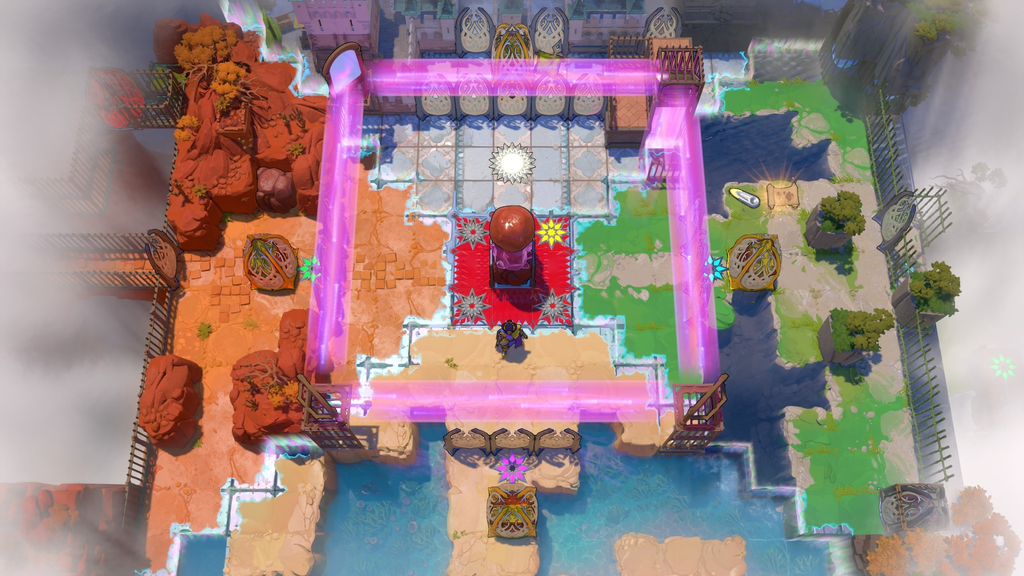
There is a little of the original The Legend of Zelda in this structure. The world itself becomes a source of curiosity, with individual puzzle rooms functioning like miniature dungeons. I am not simply selecting the next challenge from a menu. I’m exploring a place that gradually becomes more intelligible as I learn its geography and systems.
The freedom to leave a difficult puzzle and return later is particularly valuable. Sometimes I spend half an hour trying to solve a room before realizing that I’m approaching it incorrectly. Being able to move elsewhere prevents that frustration from becoming a wall. I can visit another region, encounter a different mechanic, and return with a fresh perspective.
More importantly, the overworld gives the sheer volume of puzzles a sense of purpose. Without it, the game could easily become an enormous collection of disconnected brainteasers. Here, progress feels like exploration, and exploration creates its own rewards.
The problem is that the map can become increasingly overwhelming as it expands. With so many possible directions and puzzles waiting to be solved, it is sometimes difficult to judge which challenges are central to progression and which are optional distractions. The game offers considerable freedom, but freedom is not always the same thing as clarity.
The Moment Everything Comes Together
The real magic begins when Order of the Sinking Star starts combining the mechanics of its different worlds.
Initially, each region feels like its own self-contained puzzle game. I learn how to manipulate objects, understand the rules governing mirrors, discover what the gems and beams can do, and gradually become comfortable with each system. It would already be impressive if the game simply continued producing increasingly difficult versions of these individual challenges.
Instead, it starts bringing them together.
An obstacle that was manageable in one region becomes much more complicated when combined with a mechanic from another. A familiar movement rule acquires a completely different significance when another character or object is introduced. Solutions that would work perfectly well in isolation become useless when the same principles interact on a larger board.
This is where the game’s structure becomes genuinely remarkable. The mechanics aren’t simply accumulating like features on a checklist. They are beginning to communicate with one another, creating situations that could not exist when those systems were kept apart.
The best puzzles in Order of the Sinking Star don’t ask whether you’ve learned the rules. They ask whether you’ve understood what the rules can become when they interact.
That distinction matters. A puzzle game with a thousand levels can always become a test of endurance. A puzzle game that continually finds new relationships between familiar ideas has a chance of remaining interesting long after its initial mechanics should have become predictable.
Order of the Sinking Star comes impressively close to achieving that.
A Thousand Puzzles Is Both a Gift and a Warning
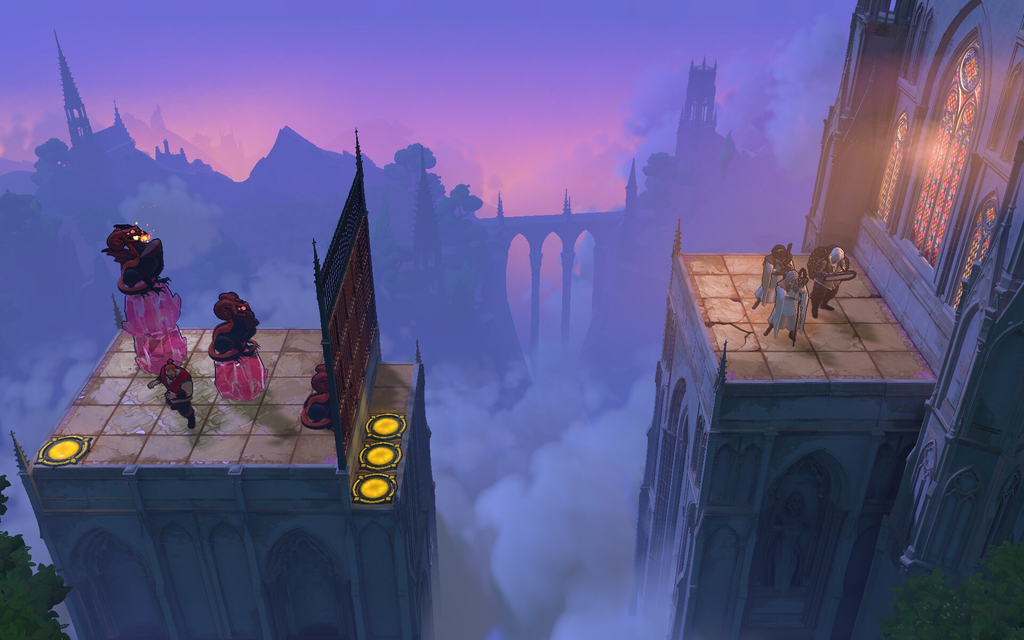
The sheer amount of content is difficult to ignore. Order of the Sinking Star offers well over a thousand handcrafted puzzles, and the developers have described the complete experience as potentially requiring hundreds of hours for players who want to discover everything.
That is an extraordinary amount of content for a single-player puzzle adventure. It also introduces a question that the game cannot completely answer: how much of a good thing is too much?
For the first several hours, the steady arrival of new ideas makes the game feel almost inexhaustible. Every region offers another way to think, every completed room opens the possibility of something more complex, and the knowledge accumulated in one area often becomes useful somewhere else.
Eventually, however, the sheer scale starts working against the experience. Some stretches feel less like a continuous stream of discoveries and more like an extended examination of concepts I already understand. Even well-designed puzzles can lose their impact when the player has spent hours applying variations of the same underlying principle.
This doesn’t mean the game is simply repetitive. Its individual challenges often remain clever, and its mechanics continue evolving. Rather, the problem is one of pacing. The distance between the introduction of an idea and its most satisfying applications can sometimes feel longer than necessary.
I also think the game occasionally confuses quantity with momentum. Adding another hundred puzzles is impressive, but a smaller selection arranged around a tighter progression can be more effective at maintaining excitement. Order of the Sinking Star has moments when I want to see what happens next, and others when I find myself asking how many more variations of the current mechanic remain.
Thankfully, the overworld allows me to change direction before that feeling becomes too overwhelming. The freedom to move between regions is not merely a convenience. It is an essential part of making such an enormous game manageable.
A Mystery That Doesn’t Always Need to Explain Itself
There is more to Order of the Sinking Star than its puzzle systems. The game introduces a mysterious fantasy world populated by unusual characters, distinct realms, and a larger narrative that gradually develops as the player explores. Dialogue, environmental details, and interactions between characters provide context for the increasingly interconnected adventure.
I appreciate that the developers have made an effort to give the world a stronger narrative identity than the largely solitary experience of The Witness. Characters have their own personalities, and the gradual discovery of the world’s larger mystery gives exploration an additional dimension. The ambition to connect gameplay and narrative is understandable, particularly in a game that asks players to spend so much time inhabiting its universe.
Unfortunately, the writing is much less consistent than the puzzle design.
Some conversations help establish the characters and make their worlds feel inhabited. Others interrupt the flow of exploration without offering much in return. The dialogue occasionally feels more interested in sounding mysterious or profound than communicating something genuinely interesting.
This is particularly noticeable when I’m caught up in the pleasure of solving puzzles. I have just worked out a satisfying solution, understood a new interaction, or discovered how two mechanics fit together. Then the game asks me to listen to another lengthy exchange that doesn’t necessarily deepen my understanding of what I’ve experienced.
The contrast can be frustrating. The puzzles are confident enough to let players discover their own answers. The narrative sometimes seems less confident, as though it needs to explain its significance rather than allowing that significance to emerge naturally.
That said, I wouldn’t dismiss the story entirely. Its strongest moments benefit from the same principle that makes the gameplay effective: uncertainty can be compelling when it encourages curiosity rather than obscuring meaning. I simply wish the writing trusted that principle as much as the puzzle design does.
Presentation That Knows When to Step Aside
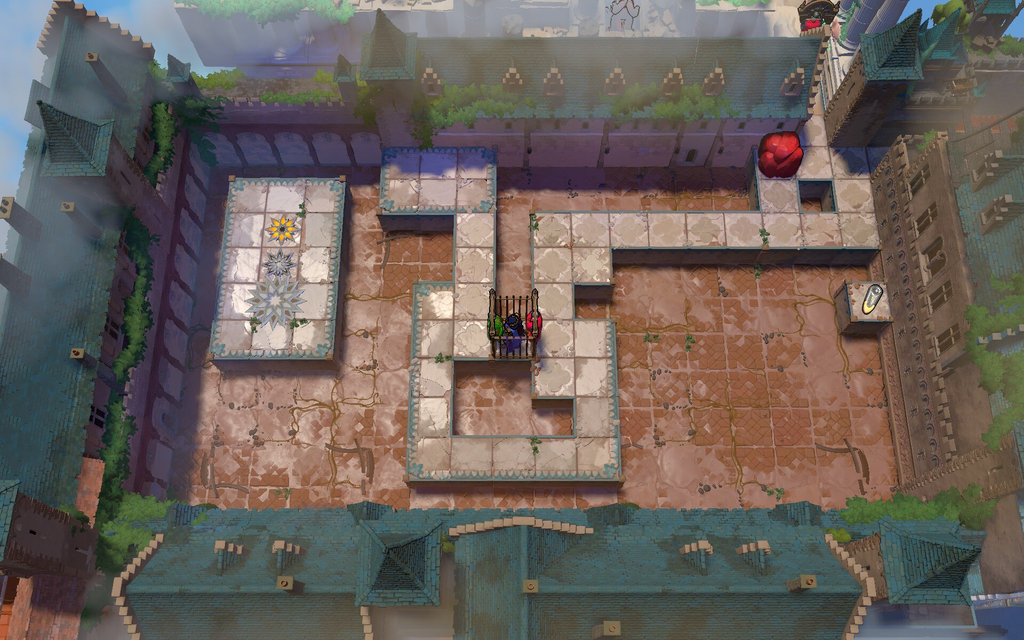
Visually, Order of the Sinking Star adopts a clean, colorful style that makes its environments and interactive objects easy to distinguish. The different realms have their own visual identities, and the game’s straightforward presentation helps keep attention focused on the boards and the relationships between their components.
That clarity is essential. In a game where a single misplaced object can change the entire solution, visual noise would be disastrous. The art direction instead emphasizes readable shapes, recognizable objects, and environments that communicate important information without constantly demanding attention.
The soundtrack and sound design are similarly restrained. Ambient music establishes the atmosphere without competing with the concentration required to solve difficult puzzles, while effects provide useful feedback as objects move and mechanisms activate. Voice acting adds personality to the characters, although the quality of the writing means that not every conversation is equally engaging.
On PC, the game is generally a strong fit for the genre, particularly for players who prefer using a controller or taking their time with individual rooms. The expansive overworld and certain effects-heavy situations can be more demanding than the simple visual style might suggest, but the core puzzle experience remains clear and responsive on a suitable setup.
The most important achievement here is that the presentation serves the mechanics. Nothing about the visual design needs to shout for attention because the puzzles provide more than enough reasons to keep looking at the screen.
Who Is This Game Actually For?
Order of the Sinking Star isn’t necessarily the ideal puzzle game for someone who wants a succession of short, neatly packaged challenges. It demands patience, and some of its later ideas require a willingness to sit with a problem long after the obvious solutions have failed. Players who prefer constant narrative progression or frequent rewards may find its approach exhausting.
For the right audience, however, it is an extraordinary proposition. If you enjoy Sokoban-style puzzles, spatial reasoning, experimental game mechanics, and the feeling of developing an entirely new way to think about a familiar problem, there is an enormous amount to appreciate here.
It also helps to understand that completing every puzzle is not the only meaningful way to experience the game. The overarching adventure has a conclusion, and players do not need to exhaust the entire collection to reach the story’s ending. That distinction makes the game’s scale less intimidating than the headline number suggests.
You can pursue the central adventure, spend additional time exploring the mechanics you find most interesting, or attempt to solve as much of the world as your patience allows. The game is at its best when that choice feels like an expression of curiosity rather than an obligation to clear another hundred rooms.
Final Verdict
Order of the Sinking Star is an exceptional puzzle adventure whose biggest strength and most significant weakness are the same thing: its ambition.
Its four major puzzle worlds offer remarkably varied systems, while the overworld gives them room to develop independently before combining them in increasingly sophisticated ways. The rewind mechanic encourages productive experimentation, the gradual discovery of new rules creates genuine intellectual rewards, and the scale of the experience is almost difficult to comprehend.
Yet the game’s size occasionally works against its momentum. Some puzzle sequences linger too long on familiar principles, and the dialogue rarely achieves the same level of elegance as the underlying mechanics. There are moments when I wish the game would trust its ideas, cut a little of the explanation, and allow its best discoveries to speak for themselves.
Even with those reservations, the sheer quality of its strongest puzzles is difficult to deny. Order of the Sinking Star repeatedly finds ways to make simple movement rules feel surprising, and the most satisfying solutions emerge from genuine understanding rather than arbitrary trial and error.
Pros
- Exceptionally clever puzzles with mechanics that evolve and combine in surprising ways
- Four distinct puzzle worlds with different rules and problem-solving styles
- An expansive overworld that rewards exploration
- Excellent rewind tools that encourage experimentation
- A huge collection of handcrafted challenges
- Clear visual design that supports the puzzles
- A substantial adventure with room for both casual exploration and deep mastery
Cons
- The enormous amount of content sometimes hurts pacing
- Certain puzzle sequences become repetitive
- Dialogue and worldbuilding are less compelling than the gameplay
- The growing overworld can feel overwhelming
- Some mechanics are more difficult to interpret than they should be
Score: 9.5/10
Order of the Sinking Star: Order of the Sinking Star is a remarkable achievement in puzzle design, even if its ambition occasionally exceeds its ability to maintain momentum. Its best moments deliver the rare satisfaction of discovering not just the answer to a problem, but a new way of thinking about the world in front of you. – Tom Henry
It is a game that can occupy hundreds of hours, but its real value isn’t measured by the number of puzzles it contains. It is measured by how often it makes you stop, reconsider everything you thought you understood, and realize that the solution was waiting for you to ask a better question.
For puzzle enthusiasts, that is an extraordinary reason to begin the journey.