


Most military shooters make you feel powerful. They give you a weapon, point you toward an objective, and encourage you to turn everything between you and victory into a pile of bodies. Gallipoli wants you to feel something rather different. It wants you to feel that you are one frightened, replaceable soldier in a war that does not care whether you survive the next thirty seconds.
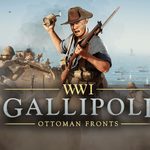
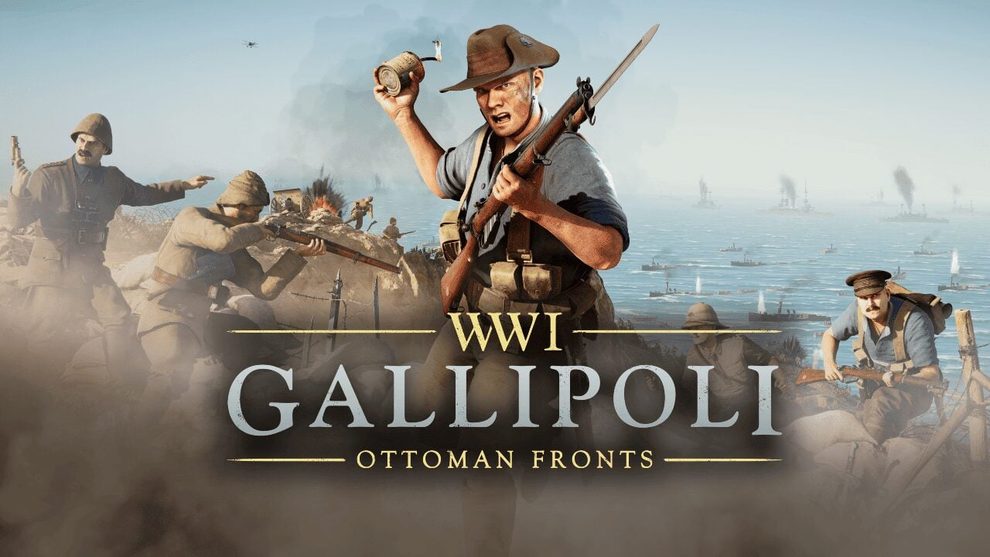
Developed and published by BlackMill Games, Gallipoli is the fourth entry in the studio’s WW1 Game Series, following Verdun, Tannenberg, and Isonzo. This time, the action moves away from the familiar European battlefields and into the Ottoman Fronts, from the beaches of the Gallipoli Peninsula to the deserts and fortified positions of the wider Middle Eastern campaigns. Its 50-player battles, historically inspired weaponry, ten specialized classes, and objective-based warfare might sound familiar to anyone who has played the previous games, but this new setting gives the formula a welcome change of scenery.
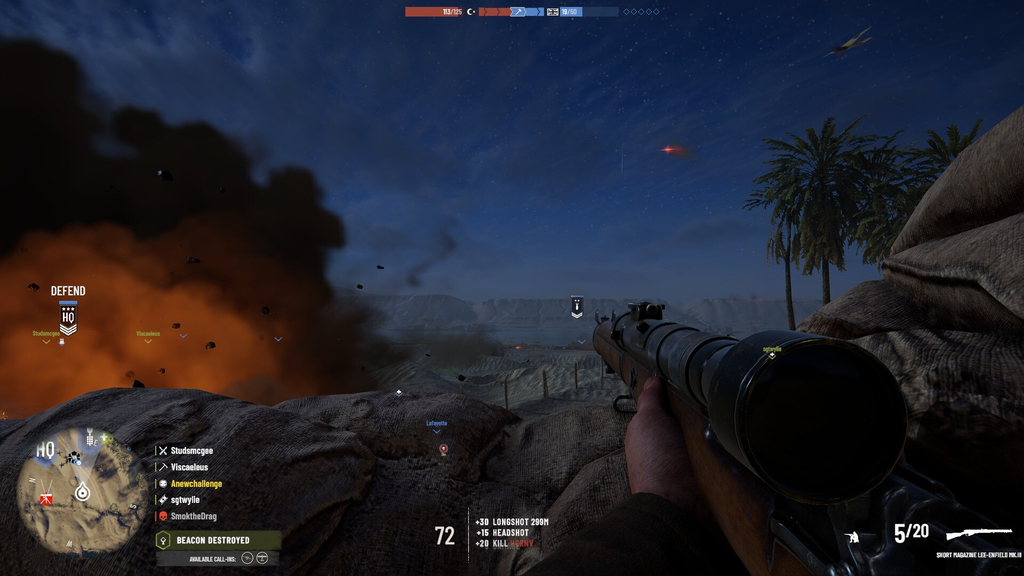
What makes Gallipoli interesting, however, is not simply that it looks different from other World War I shooters. It is how insistently it refuses to treat combat as a test of reflexes alone. Landing on a beach, crossing an exposed stretch of desert, or attacking a fortified position becomes a problem of positioning, coordination, and patience. Shooting is only one part of the solution.
And sometimes, shooting is the worst thing you can do.
A War That Punishes Impatience
The first thing I noticed about Gallipoli is how uncomfortable it makes me feel when moving across open ground. Movement is deliberately restrained, stamina limits how freely I can sprint, and the weapons lack the forgiving responsiveness of modern military shooters. Most rifles can kill with a single well-placed shot, but actually delivering that shot under pressure is another matter entirely.
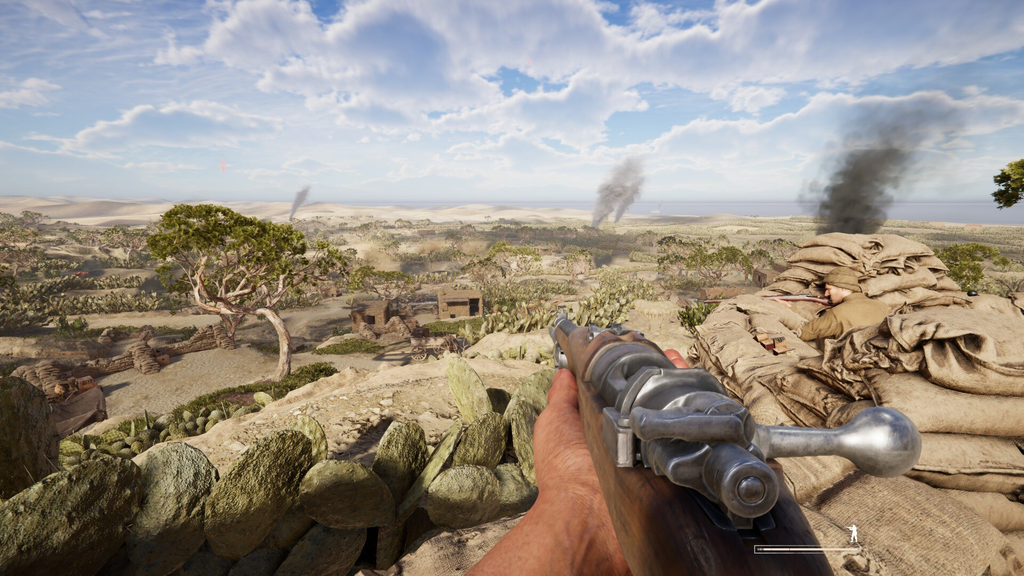
Bolt-action rifles demand a rhythm. I need to aim, account for movement, fire, cycle the bolt, and prepare for the possibility that I have just missed the only clean opportunity I am going to get. Reloading takes time, ammunition matters, and getting caught in the open is often a death sentence. There is no convenient way to turn a poor tactical decision into a heroic escape simply by moving faster than everyone else.
This deliberate clumsiness is a defining feature of the experience, although it will undoubtedly divide players. I appreciate the intention behind it, but I don’t think every instance of awkwardness automatically makes a shooter more realistic. When I miss because I misjudged a moving target, I feel responsible for the mistake. When a weapon or movement animation feels unnecessarily cumbersome, that responsibility becomes less clear.
Gallipoli walks a fine line between making combat feel difficult and making it feel frustrating. It usually lands on the right side, but not consistently enough to eliminate the irritation.
Suppression Is More Interesting Than Another Killstreak
One of Gallipoli’s smartest mechanics is its suppression system. Incoming fire can disrupt an enemy’s aim, increase weapon sway, obscure their vision, and eventually push them into a state of panic. This means that firing at an opponent can be useful even when I have no realistic chance of hitting them.
That might sound like a minor detail, but it changes the way I think about combat.
In most shooters, a missed shot is a failed action. Here, it can be a contribution. If I keep a machine gun trained on an enemy position, I can make life significantly more difficult for the soldiers trying to defend it. While they struggle to return accurate fire, my teammates can advance, reposition, or prepare an assault.
Gallipoli understands that battlefield control is not the same thing as killing the enemy.
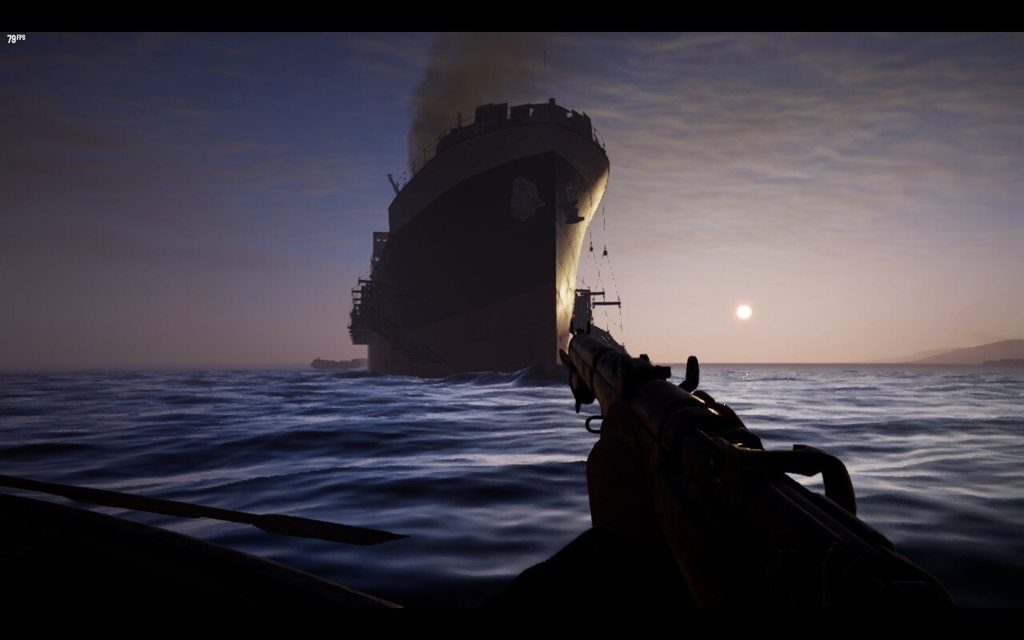
That is a deceptively sophisticated idea for an FPS. It gives support-oriented players something meaningful to do and creates situations where teamwork can compensate for individual limitations. The best squad is not necessarily the one with the sharpest aim. It is the one that understands how to create opportunities for everybody else.
There is a particularly satisfying contrast between suppression and the game’s lethal weapons. One player creates uncertainty; another takes advantage of it. The firefight becomes less about competing reaction times and more about controlling what the opposition is able to do.
Expedition Turns Every Death Into a Strategic Decision
Gallipoli revolves around a single main multiplayer mode called Expedition. Attackers must push through successive defensive sectors, capturing objectives and breaking through enemy positions before their available reinforcements run out. Defenders attempt to halt that advance, forcing the attackers to spend lives and resources until their offensive collapses.
At first, the limitation to one main mode sounds disappointing. It certainly restricts the variety available at launch, and I would have welcomed a second distinct way to play. Yet Expedition is more substantial than its straightforward premise suggests.
The attacking team has a shared Momentum resource that decreases with deaths. This gives individual mistakes a consequence beyond the usual respawn screen. A reckless charge might eliminate one enemy, but if it costs several attackers their lives in return, the exchange can leave the entire team worse off. A squad that repeatedly throws itself at a machine-gun nest can lose a battle before it even runs out of ammunition.
That creates an interesting tension between aggression and restraint. Sometimes I need to push immediately before the defenders become too comfortable. At other times, the smartest move is to stop, reorganize, and wait for support instead of donating another life to a fortified position.
The system does not make every match brilliant. Some attacks still devolve into repeated attempts to overwhelm a defensive line, particularly when one side struggles to coordinate. But Momentum gives Expedition a tangible strategic backbone that many objective-based shooters lack.
The important question is no longer simply whether my team can capture the objective. It is whether we can afford the price of capturing it.
Ten Classes, One Battlefield
Class-based combat is another area where Gallipoli gets the fundamentals right. Its ten historical classes provide different ways to contribute, ranging from conventional infantry to snipers, machine gunners, engineers, medics, and officers responsible for coordination and support.
The distinction between classes matters because the battlefield constantly changes around them. An engineer can establish fortifications, including sandbags, barbed wire, and machine-gun positions. Officers can coordinate support, while specialist roles can provide covering fire or help keep wounded teammates in the fight.
What I appreciate most is that these roles feel connected to the setting rather than designed around an abstract multiplayer meta. Building a defensive position can genuinely change the geometry of an attack. A useful spawn beacon can keep a squad close to the frontline. A medic who risks reaching a downed teammate can save more than one soldier’s life in a match where reinforcements are limited.
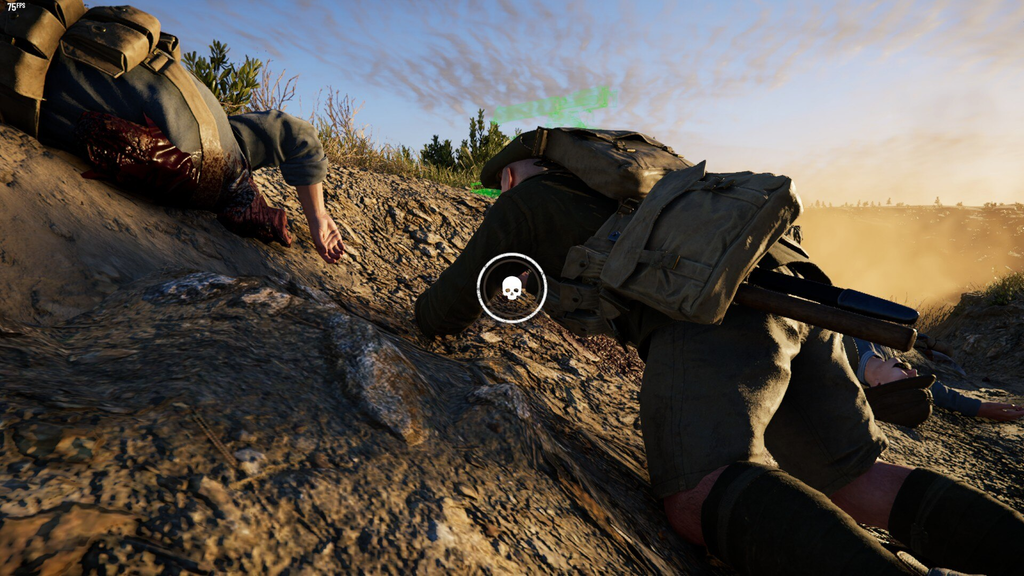
The downed-state system adds another layer of tension. Being shot does not always mean immediately disappearing into a respawn screen. If I can crawl toward cover, I might survive long enough for a teammate to revive me. On the other hand, lying wounded in an exposed field while watching friendly soldiers fight nearby can be an exceptionally uncomfortable experience.
These are the moments where Gallipoli feels most convincing. Cooperation is not a bonus that happens when everybody feels like playing as a team. It is frequently the difference between a useful advance and a complete disaster.
The Ottoman Fronts Deserve This Spotlight
Gallipoli’s greatest advantage over its predecessors is its setting. The WW1 Game Series has already explored the Western Front, the Eastern Front, and the mountainous battlefields of the Italian Front. Moving into the Ottoman Fronts gives BlackMill Games new geographical and tactical problems to work with.
The difference is immediately apparent. Anzac Cove and V Beach bring exposed landings and punishing approaches. Other environments introduce arid landscapes, fortified hills, villages, and tighter urban combat. Dust and smoke can interfere with visibility, while the arrangement of trenches, buildings, and natural cover changes how each assault unfolds.
I particularly like how the environments affect the way I perceive distance. A long sightline across open terrain is not simply a pretty view. It is a warning. Crossing it means exposing myself to enemies who may have been watching that approach for several minutes. A narrow passage between buildings, meanwhile, might offer better protection but create an obvious place for defenders to concentrate their fire.
The strongest maps communicate their tactical challenges through their layout rather than relying entirely on scripted events. They encourage me to assess the terrain, identify dangerous approaches, and reconsider my route when a position becomes untenable.
The historical inspiration also gives the locations a distinct identity. These are not interchangeable European trenches with different textures applied. The shift in climate, architecture, and geography helps the game establish a separate character within a familiar series.
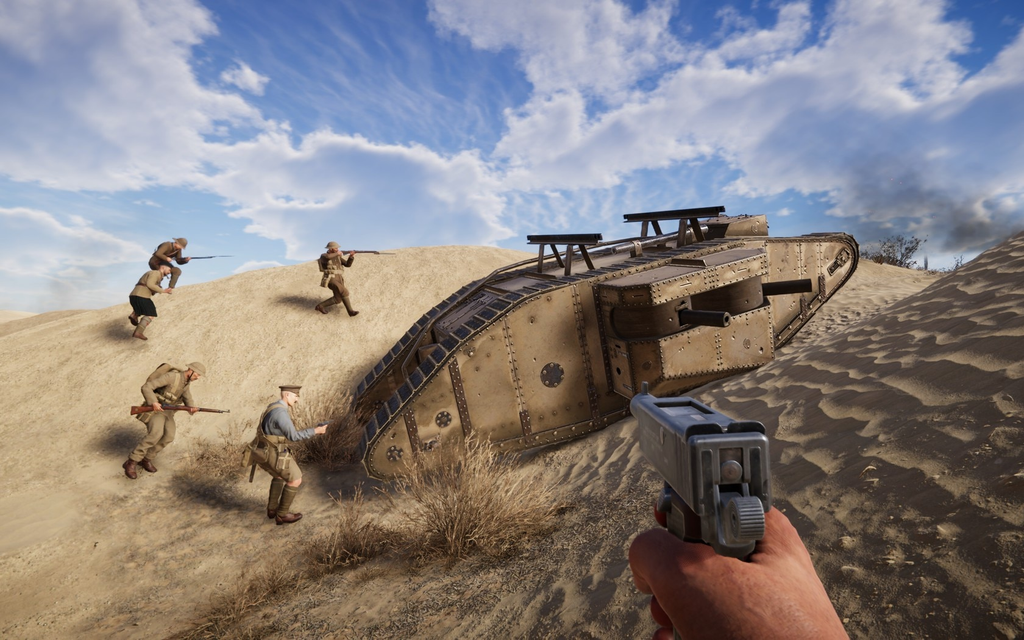
Following the original release, the free Ali Al Muntar expansion added another map inspired by the Second Battle of Gaza, along with four new weapons. Its opening assault features British Mark I tanks supporting the advance, although players still fight on foot. The addition is a welcome step toward expanding the game’s variety, and the cactus-filled approaches to the final position create their own close-range tactical challenges.
The expansion does not fundamentally change the formula, but it reinforces the idea that the Ottoman Fronts can support a broader collection of distinct battlefields.
Historical Authenticity Without the History Lesson
Gallipoli takes its historical subject seriously without burying the player under lengthy exposition. There is no traditional single-player campaign following a fictional hero through a scripted narrative. Instead, the game relies on its battlefields, uniforms, equipment, and objective descriptions to establish context.
That approach works, although I occasionally wanted more historical interpretation. The Gallipoli campaign and the wider Ottoman Fronts encompass complex operations and perspectives that cannot be fully explored through multiplayer objectives alone. A little more optional historical information would have strengthened the experience without slowing down the action.
Still, the game’s restrained presentation is preferable to turning the conflict into a sequence of melodramatic cutscenes. Gallipoli generally lets the battlefield speak for itself. Its strongest moments emerge from the interaction between players, not from a character explaining how important the next mission is.
Technical Rough Edges Keep It From Greatness
For all its strengths, Gallipoli is not as polished as I would like. The intentionally slower combat sometimes crosses into genuine friction, and movement around cover can feel less flexible than it should. The absence of a leaning mechanic is particularly noticeable when trying to make use of tight defensive positions.
There are also occasional technical problems involving hit registration, movement, stability, and uneven map balance. None of these issues completely undermines the core experience, but in a shooter where a single bullet can end a fight, reliability is especially important. An inconsistency that might be forgivable in a more forgiving game feels much more significant when every encounter carries such a high price.
The user interface can also become cluttered. Markers and icons provide useful information, but they sometimes compete with the very battlefield I am trying to observe. The option to hide the HUD helps restore some visual clarity, though it is not a perfect substitute for a better-balanced interface.
Then there is the limited mode selection. Expedition provides a solid foundation, but the lack of a second major mode makes the package feel narrower than its maps and class system deserve. Additional free content is planned, and the first expansion is encouraging, but future updates cannot entirely replace the variety a launch package should ideally offer.
The Biggest Reason to Play Gallipoli
After spending time with Gallipoli’s systems, I think its greatest achievement is how it makes restraint feel like an active skill.
Most shooters reward immediate action. See an enemy, shoot them. Spot an objective, sprint toward it. Encounter resistance, increase the volume of fire. Gallipoli asks me to think about the consequences of every one of those instincts.
Is the target worth exposing myself to hit? Can suppressive fire create a better opportunity? Should I stay with my squad rather than chase an isolated opponent? Is this assault worth the lives it will consume? Can we afford another failed attempt?
These questions give ordinary moments an unusual amount of weight. A few seconds spent waiting behind a wall can be more useful than a spectacular charge. A machine gunner who never gets a kill can be the most important player in the squad. And a soldier who survives an engagement by retreating might contribute more to the eventual victory than somebody who dies heroically in the middle of the objective.
That is what separates Gallipoli from shooters that simply use realistic weapons and historical uniforms. It does not merely make combat look dangerous. It builds its systems around the consequences of danger.
Verdict
Gallipoli is a strong addition to the WW1 Game Series, built around a compelling setting and a combat model that rewards patience, positioning, and genuine teamwork. The suppression mechanic gives firefights additional depth, Momentum makes reckless attacks costly, and the class system encourages players to contribute in different ways. Its Ottoman Fronts also provide a welcome change of scenery, with battlefields that ask different tactical questions from those of its predecessors.
Its weaknesses are equally clear. The gunplay can be frustratingly awkward, the interface needs refinement, technical inconsistencies occasionally undermine firefights, and Expedition remains the sole central mode. The free Ali Al Muntar expansion is a positive step, but there is still room for greater variety and polish.
Even so, Gallipoli succeeds at something that many larger shooters struggle to achieve. It makes me think about what I am doing instead of simply giving me more things to shoot.
Pros
- Lethal, deliberate gunplay that rewards patience and positioning
- Excellent suppression and panic mechanics
- Ten specialized classes with meaningful team roles
- Strong map design across varied Ottoman Front battlefields
- Shared Momentum resource gives attacks real strategic consequences
- Construction and revives make teamwork essential
- Distinctive historical setting and atmosphere
Cons
- Weapon handling can feel unnecessarily clumsy
- Occasional hit-registration, movement, and stability issues
- Interface clutter sometimes obstructs the action
- Only one main game mode
- Certain attacks and defensive positions feel unevenly balanced
Score: 8/10
Gallipoli: Gallipoli is a thoughtful, demanding military shooter that understands something many FPS games forget: combat is not just about how quickly you can kill someone, but how effectively you help your side win. It is not always smooth, and it needs more variety, but when its systems come together, it delivers some of the most tense and rewarding team-based firefights in the genre. – Tom Henry