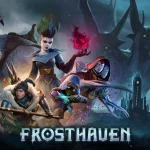
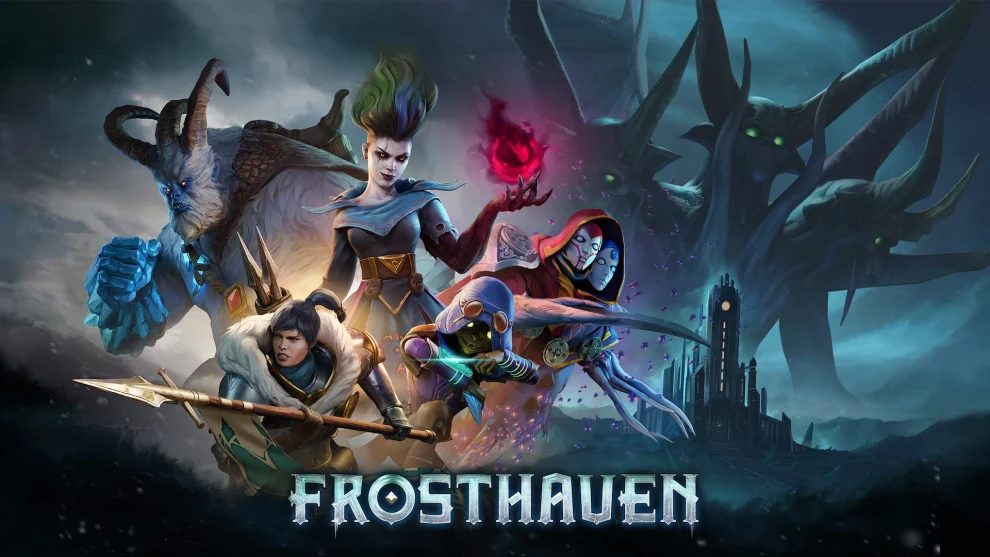
Some tactical RPGs make you feel powerful. You assemble a party, collect better equipment, unlock devastating abilities, and eventually become the sort of adventurer who treats ordinary enemies as a mild inconvenience. Frosthaven has a different idea of heroism. Here, winning a battle can leave your party exhausted, your best abilities depleted, and your plans for the next encounter in pieces. Sometimes the smartest move is not the one that deals the most damage, but the one that ensures you can still fight ten turns later.
Developed by Snapshot Games and published by Arc Games, Frosthaven is the digital adaptation of Isaac Childres’ acclaimed tabletop tactical RPG, following in the footsteps of Gloomhaven. The full PC release arrived on October 15, 2026, bringing the complete campaign, all 17 playable heroes, additional quality-of-life features, and a collection of improvements developed during its fifteen-month Early Access period.
The result is one of the more demanding tactical RPGs available on PC. Its combat systems are genuinely excellent, character builds offer enormous strategic possibilities, and the campaign combines dungeon crawling with the gradual reconstruction of a settlement on a hostile northern frontier. Unfortunately, a steep learning curve, some awkward interface decisions, and persistent multiplayer problems prevent the full release from feeling as polished as it should.
Combat Is About Managing Your Future
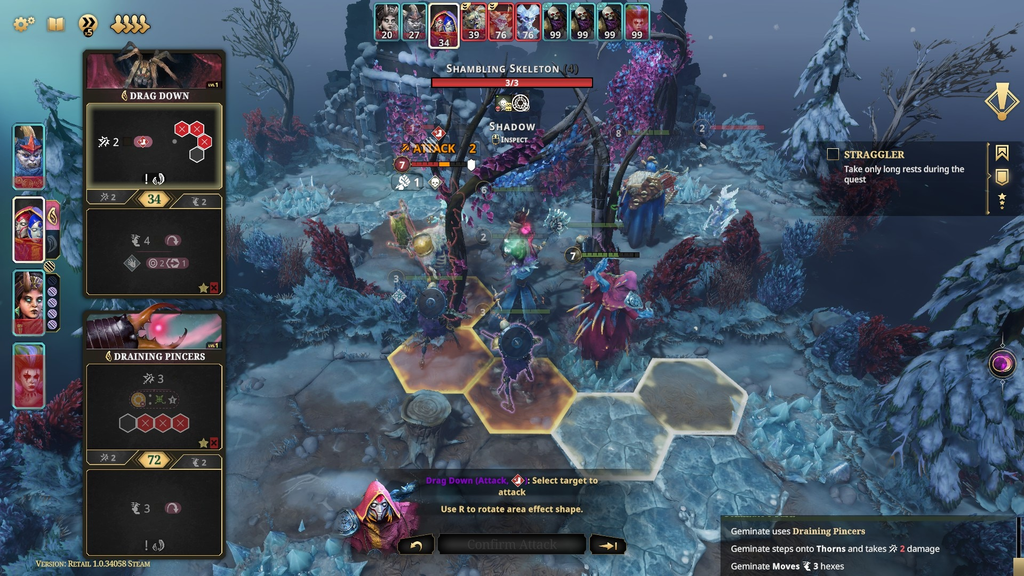
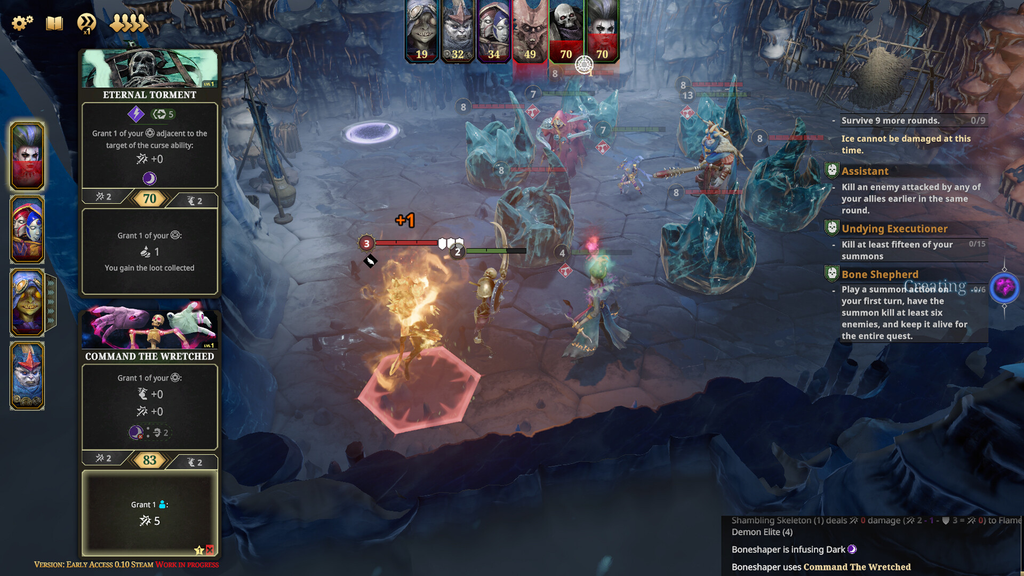
At its core, Frosthaven uses an ability-card system that makes every turn a small exercise in risk management. Each hero has a unique deck, and you select two cards at the beginning of a round. Their initiative values determine when your character acts relative to enemies and other members of your party, while the actions printed on the cards determine what you can actually accomplish.
This sounds straightforward until you realize how much information you need to consider simultaneously. An enemy might be preparing a dangerous attack, a teammate could need healing, and a distant objective might require someone to move into position immediately. Your strongest attack might solve the first problem while making the other two considerably harder to address. Selecting the right cards is therefore less about maximizing immediate damage and more about anticipating how the entire round will unfold.
The genius of this system is that your cards are also a survival resource. Using abilities depletes your options, and resting allows you to recover discarded cards at a cost. Some powerful actions permanently remove cards from your available resources for that scenario. Take too many risks early, and your character can run out of useful options before the encounter is over.
This creates an unusual relationship between power and exhaustion. A spectacular attack is not simply a free opportunity to deal more damage. It is a decision about how much of your future potential you are willing to sacrifice for an immediate advantage.
Frosthaven makes every powerful move feel like borrowing against the future. That is the game’s defining strength, and it is what separates its combat from the more conventional turn-based RPGs that use abilities with simple cooldowns or regenerating mana.
Seventeen Heroes, Seventeen Problems to Solve
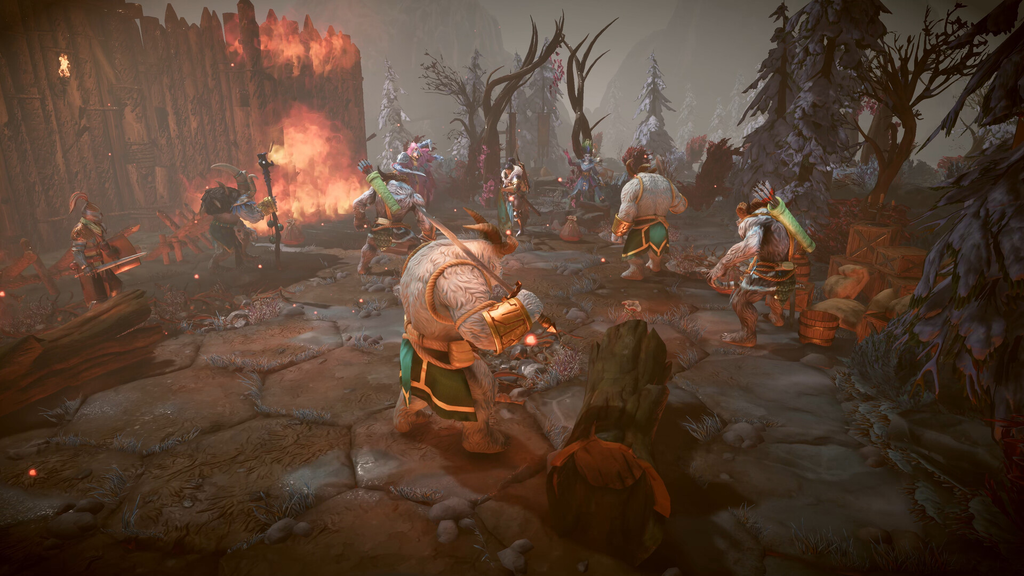
The full release offers 17 playable heroes, including six starting classes: Banner Spear, Boneshaper, Drifter, Geminate, Blinkblade, and Deathwalker. Additional characters become available as the campaign progresses, and the differences between them go much further than exchanging one weapon for another.
The Boneshaper, for example, can summon skeletons to help overwhelm enemies, but doing so involves managing the health cost associated with its abilities. Other heroes manipulate time, switch between different forms, or rely on positioning and carefully coordinated attacks. Some reward aggressive play, while others become effective only when you understand how to prepare the battlefield for their abilities.
I particularly like how these classes change the way I evaluate a tactical situation. With one character, a group of enemies might represent an opportunity to unleash area damage. With another, the same formation could be a liability that needs to be dismantled one target at a time. Building a party is not simply a matter of selecting the four strongest characters. It is about finding complementary abilities and understanding how they can cover one another’s weaknesses.
The possibilities are substantial, and the satisfaction of executing a well-planned combination is considerable. A carefully timed attack can open a path for another hero, who then moves into position to finish an enemy before it can retaliate. When everything clicks, Frosthaven feels less like a traditional RPG and more like solving a complicated tactical puzzle under pressure.
The downside is that many of the most interesting classes are also difficult to understand. Their mechanics require patience, and some abilities are far less intuitive than their descriptions suggest. The game gives experienced tabletop players plenty to work with, but newcomers can struggle to understand why a seemingly sensible turn has produced such a disastrous result.
The Town Is Your Other Campaign
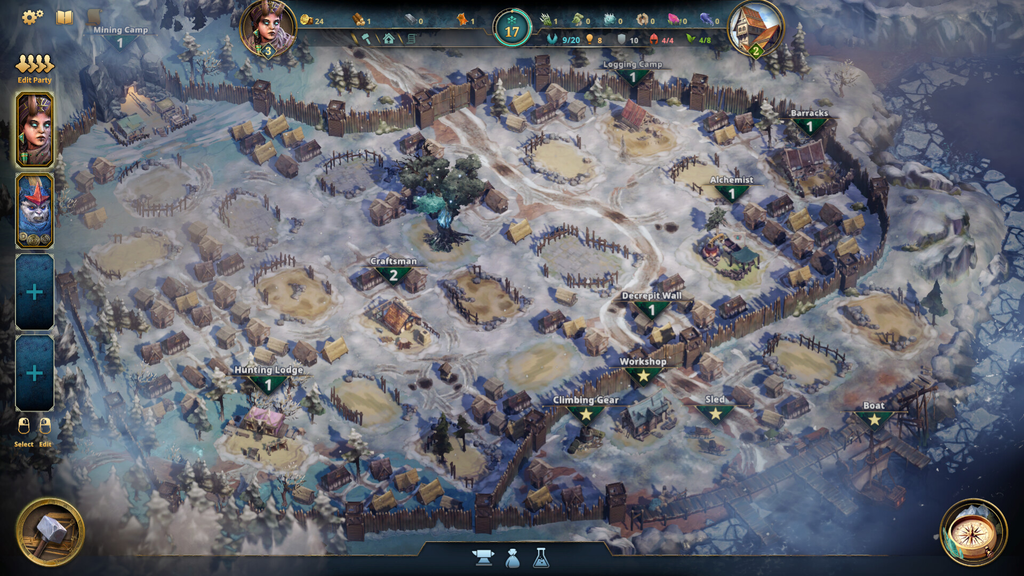
Combat is only half of the experience. Between missions, your mercenaries return to Frosthaven, an outpost that begins in a dire state and gradually develops as you gather resources, construct buildings, and unlock additional features.
This management layer provides a welcome change of pace. Instead of immediately heading into another dungeon, you have reasons to consider what your previous expedition accomplished and how its rewards can help the settlement. Buildings introduce new opportunities, while upgrades gradually expand the town’s capabilities. Road events and outpost events add further decisions, with some choices providing useful advantages and others potentially damaging the infrastructure you have worked to build.
I like that the outpost gives the campaign a sense of continuity. Individual battles matter because they contribute to something larger than the next reward screen. Even when a scenario goes badly, the wider campaign can continue developing, giving you opportunities to strengthen your settlement and return better prepared.
It also changes how I think about failure. In many tactical RPGs, losing a mission is primarily a setback that forces you to repeat an encounter. Frosthaven is more interested in the broader campaign surrounding that loss. There are still painful consequences, but the outpost and progression systems create reasons to keep moving forward rather than treating every defeat as wasted time.
The balance between combat and settlement management is not always perfect, and the town never becomes as compelling as the tactical encounters themselves. Nevertheless, it gives Frosthaven’s long campaign an important sense of purpose.
The Digital Version Has Some Excellent Improvements
Translating a massive tabletop game into a computer game offers an obvious advantage: the software can handle the administrative work that would otherwise slow down a physical session.
Frosthaven takes advantage of this. Setup, bookkeeping, enemy behavior, and scenario rules are handled automatically. You can speed up animations, undo certain actions, and use the in-game Codex to explore information about the world’s characters, creatures, and environments. The full release also introduces customizable House Rules and a new digital-only introduction called Road to Frosthaven, designed to help players understand the campaign’s mechanics before committing to the main adventure.
These improvements make a substantial difference. Frosthaven’s tabletop origins are still visible in its cards, icons, and unusually specific rules, but the digital adaptation removes much of the repetitive administration. The ability to speed up animations is particularly welcome during longer encounters, while undo options make experimentation less intimidating when learning a complicated class.
Still, streamlining the rules does not automatically make those rules easy to understand. The interface remains crowded, some card interactions require considerable reading, and the tutorial often explains the basic controls without fully preparing you for the more unusual situations that follow.
Road to Frosthaven is a welcome addition, but I would have liked more detailed class-specific guidance. Understanding how to select two cards is one thing. Understanding why a particular pair works together, how initiative affects your team’s plans, and when to sacrifice a powerful card requires a much deeper explanation.
A Brilliant Game Can Still Be an Unwelcoming One
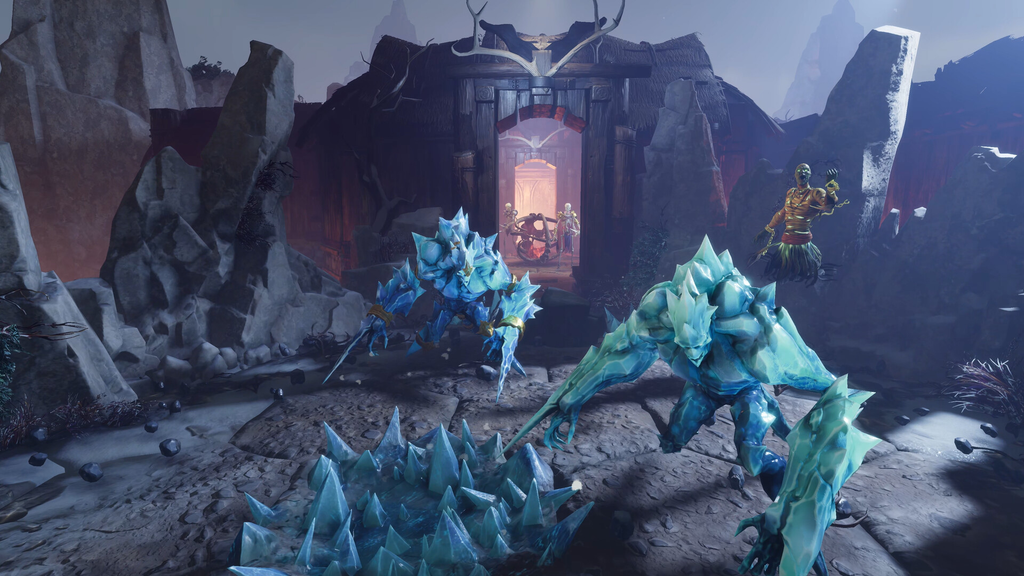
Frosthaven’s greatest weakness is the gap between the depth of its mechanics and the effort required to understand them. The game expects you to learn a fairly complex tactical language while simultaneously punishing mistakes that can affect an entire encounter.
Some scenarios become overwhelming surprisingly early. You might face several enemies, protect vulnerable characters, and manage complicated turn orders before you have fully grasped your own party’s abilities. The difficulty can be exhilarating once you understand what the game expects from you, but initially it can feel less like a fair examination of your tactical skills and more like being dropped into an advanced class without the introductory lesson.
The good news is that the game offers difficulty options and enough strategic flexibility to accommodate different levels of experience. Failure can also be a useful learning opportunity, particularly when you begin to recognize how a different card selection or character combination might have changed the outcome.
But I cannot ignore the onboarding problem. A game with this much depth should do a better job of helping players discover it. There is a difference between a difficult decision and a decision whose consequences are difficult to understand because the relevant information is poorly presented.
Multiplayer Is the Biggest Concern
Frosthaven supports online cooperative play for up to four players, and conceptually it should be an excellent way to experience the game. Coordinating different classes with friends can make its tactical encounters even more satisfying, particularly when everyone understands their character’s strengths and contributes to a shared plan.
Unfortunately, the full release has suffered from multiplayer desynchronization and other technical issues. Some players have reported disconnections, crashes, and situations in which an encounter becomes difficult or impossible to complete without restarting. Experiences vary, but the problems have been serious enough to affect the game’s recent reception.
That is particularly frustrating because Frosthaven is built around cooperation. A multiplayer bug is not merely an inconvenience when it interrupts a long scenario. It can undermine the careful planning that makes the game worth playing in the first place.
Solo play appears to be a more reliable experience, and the tactical systems work well when you can control the pace of your own session. However, if your primary reason for buying Frosthaven is to play through the campaign with a regular group, the current technical situation deserves serious consideration.
For a game that has spent fifteen months in Early Access, these problems are disappointing. The full release brings meaningful improvements, but multiplayer stability needs to be a priority if the digital adaptation is going to deliver consistently on its promise.
Final Verdict
Frosthaven is an outstanding tactical system wrapped in a sometimes frustrating digital experience. Its card-based combat rewards careful planning, its heroes offer remarkable variety, and the outpost gives the campaign a sense of progression beyond individual battles. When the mechanics come together, it produces the sort of victories that feel genuinely earned.
The difficulties are substantial, though. Newcomers face an unforgiving learning curve, the interface does not always make complex rules easy to understand, and multiplayer instability remains a serious problem at launch. These shortcomings do not erase the quality of the underlying design, but they do make it harder to recommend without qualification.
Pros
- Deep, inventive tactical combat built around ability cards
- Seventeen heroes with distinctive mechanics and strong party synergies
- Meaningful resource management and punishing but rewarding decisions
- Outpost building gives the campaign long-term progression
- Useful quality-of-life features, including undo options and faster animations
- Complete campaign and extensive content in the 1.0 release
Cons
- Steep learning curve and limited class-specific tutorials
- Crowded interface and occasionally unclear card interactions
- Some scenarios feel disproportionately punishing
- Multiplayer desynchronization and crashes affect the experience
- The outpost management layer is less compelling than combat
Score: 8/10
Frosthaven: Frosthaven is a game about making difficult decisions with incomplete information, and its best moments are exceptional. Every card has an opportunity cost, every battle forces you to consider what comes next, and every victory feels meaningful because your resources are never truly unlimited. – Tom Henry
It is also a game that asks a lot from its players. Those willing to learn its intricate systems will find one of the most rewarding tactical RPGs available on PC. Those expecting a smooth, immediately accessible adventure may find themselves frustrated before discovering what makes it special.
I would recommend Frosthaven to anyone who enjoys deep turn-based strategy, especially those who loved Gloomhaven Digital. Solo players have the clearest path to enjoying its considerable strengths today. For cooperative groups, however, the multiplayer issues are difficult to overlook.
The foundations are excellent. Now the developers need to make the experience around them worthy of the tactical masterpiece underneath.